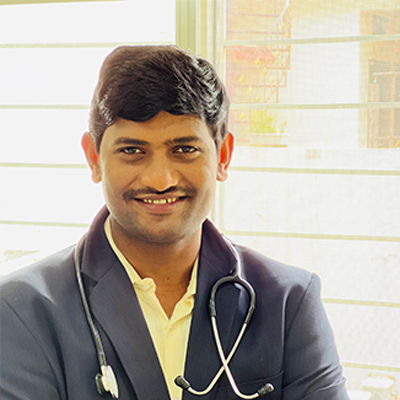
September 2026 — Dr. Shaileshkumar Garge, MBBS, MD, DNB, FRCR (UK), FNVIR, EBIR
Varicose veins affect nearly 1 in 4 adults in India — yet remain one of the most misunderstood vascular conditions. Patients delay treatment, avoid doctors, and live with avoidable pain, all because of widely circulated myths that have no medical basis.
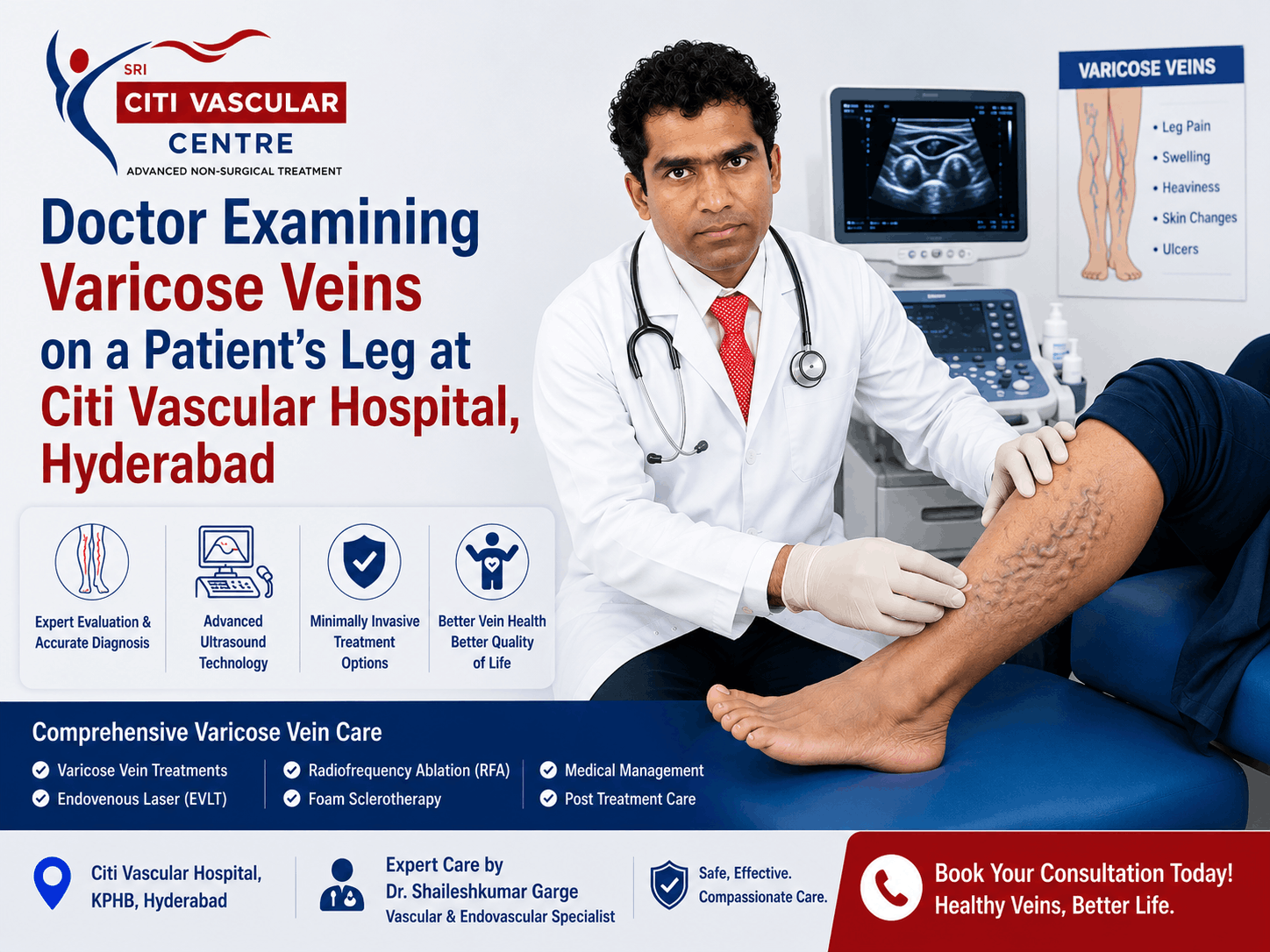
At Citi Vascular Hospital, KPHB, Hyderabad, Dr. Shaileshkumar Garge — a leading Interventional Radiologist — sees patients daily who have suffered unnecessarily because a myth convinced them their varicose veins were harmless, untreatable, or only a cosmetic concern.
This guide sets the record straight. Each myth is examined alongside the medical evidence, so you can make informed decisions about your vascular health.
Myth 4: You Should Wait Until You Are Done Having Children to Treat Them
Myth 5: Varicose Vein Treatment Is Expensive and Not Worth It
Varicose Vein Treatment Options at Citi Vascular Hospital, Hyderabad
Why Choose Dr. Shaileshkumar Garge — Citi Vascular Hospital, KPHB?
SEO / GEO / AEO Keywords
Varicose veins are enlarged, twisted, rope-like veins that appear just beneath the surface of the skin — most commonly on the legs and calves. They develop when the tiny valves inside the veins stop working correctly, allowing blood to flow backward and pool rather than returning efficiently to the heart.
This pooling causes veins to enlarge, bulge, and become visible under the skin. In mild cases, varicose veins cause only cosmetic concern. In moderate to severe cases, they cause significant pain, swelling, skin changes, and if untreated, lead to serious complications such as leg ulcers and deep vein thrombosis (DVT).
Varicose veins are a progressive medical condition — they do not resolve on their own, and they worsen over time without treatment.
Book your Appointment here: | Appoinment: |Call +91-7032508468| Whatsapp:+91-7337583901
You may have varicose veins if you notice or experience any of the following:
Visible bulging, blue, or purple veins on the legs or calves
Aching, heaviness, or tiredness in the legs — especially after standing for long periods
Swelling of the ankles or feet at the end of the day
Burning, throbbing, or muscle cramping in the lower legs
Itching around one or more of the veins
Skin discolouration or darkening near the ankles
A non-healing or slow-healing wound on the lower leg (venous ulcer)
Worsening pain after sitting or standing for extended periods
The Myth:
Many people believe varicose veins are merely unsightly — a cosmetic nuisance that does not require medical attention.
The Fact:
Varicose veins are a medical condition caused by venous insufficiency — a failure of the one-way valves inside leg veins. While early-stage varicose veins may appear only cosmetically bothersome, they are a sign of underlying circulatory dysfunction that progresses without treatment.
Left untreated, varicose veins can cause:
Persistent leg pain, heaviness, and swelling
Skin changes — discolouration, hardening (lipodermatosclerosis), eczema
Venous leg ulcers — open wounds that are difficult to heal
Superficial thrombophlebitis — inflammation and clotting in the vein
Deep Vein Thrombosis (DVT) — a potentially life-threatening blood clot
Bleeding — varicose veins near the skin surface can rupture and bleed significantly
Why This Matters:
Dismissing varicose veins as 'just cosmetic' is the most common reason patients delay treatment until complications develop. Seek a vascular specialist evaluation if you notice visible veins accompanied by any symptoms.
The Myth:
Varicose veins are an old-age problem. Young people do not need to worry about them.
The Fact:
While age does increase the risk — because veins naturally lose elasticity over time — varicose veins can develop at any age, including in teenagers. The condition affects people in their 20s, 30s, and 40s regularly, particularly those with:
A family history of varicose veins (genetics is one of the strongest risk factors)
Jobs that require prolonged standing — teachers, nurses, IT professionals, surgeons
Pregnancy — hormonal changes and increased blood volume place significant pressure on leg veins
Obesity, which increases pressure on the venous system
A history of leg injuries or previous DVT
Why This Matters:
Young people who dismiss leg symptoms because they believe they are 'too young' for varicose veins often allow the condition to worsen for years before seeking help. Early intervention leads to better outcomes and prevents complications.
The Myth:
Varicose veins are a women's problem caused by pregnancy and hormones.
The Fact:
While varicose veins are more common in women (affecting approximately 25–30% of women compared to 10–15% of men), they are far from a condition that exclusively affects women. Men develop varicose veins regularly, but are significantly less likely to seek medical attention due to the perception that it is a 'female' condition.
In men, varicose veins are often under-reported and under-diagnosed. They develop for the same underlying reasons — faulty vein valves, genetics, prolonged standing, excess weight, and advancing age.
Men with varicose veins are just as at risk for complications including skin ulcers, DVT, and spontaneous bleeding as women.
Why This Matters:
Male patients frequently present at advanced stages of venous disease because the myth that 'men don't get varicose veins' delayed their consultation. Varicose vein disease does not discriminate by gender.
The Myth:
If you are pregnant or still planning to have children, varicose vein treatment should be postponed entirely.
The Fact:
This myth contains a grain of truth — active pregnancy is generally not the ideal time for elective vein treatment, as varicose veins sometimes improve spontaneously in the months after delivery as hormones normalise. However, the advice to 'wait until you are completely done having children' is medically outdated and potentially harmful.
The reality is:
Varicose veins treated between pregnancies will not necessarily return with a subsequent pregnancy
Significant symptom relief between pregnancies is possible and worthwhile
Severe varicose veins that are causing pain, ulcers, or clotting during pregnancy may be treated safely with specialist guidance
Compression stockings and lifestyle modifications are safe and effective during pregnancy for symptom management
Delaying treatment allows veins to worsen with each successive pregnancy
Why This Matters:
A woman with symptomatic varicose veins does not have to live in pain for potentially 10+ years waiting until her family is complete. A consultation with a vascular specialist like Dr. Shaileshkumar Garge will determine the right timing and approach for your individual situation.
The Myth:
Varicose vein procedures are prohibitively expensive and not covered by insurance.
The Fact:
Modern varicose vein treatments in Hyderabad are significantly more affordable than many patients assume. More importantly, the cost of treatment must be weighed against the cost of leaving varicose veins untreated — which includes increasing disability, venous ulcer wound care, hospitalisation for complications, and lost productivity.
At Citi Vascular Hospital, KPHB, Hyderabad, the following minimally invasive options are available:
|
Treatment |
Approx. Cost (INR) |
Recovery Time |
Anaesthesia |
|---|---|---|---|
|
Sclerotherapy (injections) |
₹5,000 – ₹15,000 per session |
Same day |
None / topical |
|
Endovenous Laser Ablation (EVLA) |
₹30,000 – ₹70,000 |
1–2 days |
Local / sedation |
|
Radiofrequency Ablation (RFA) |
₹35,000 – ₹75,000 |
1–2 days |
Local / sedation |
|
Foam Sclerotherapy |
₹8,000 – ₹20,000 |
Same day |
None |
|
Compression stockings (ongoing) |
₹800 – ₹3,000 |
Immediate |
None |
Health insurance in India increasingly covers varicose vein treatment when venous insufficiency is clinically documented. Patients experiencing symptoms such as pain, swelling, and skin changes are generally eligible for insurance coverage.
Why This Matters:
Do not make financial decisions about vascular health based on assumptions. Contact Citi Vascular Hospital for a transparent, personalised cost estimate before deciding that treatment is beyond your means.
Book your Appointment here: | Appoinment: |Call +91-7032508468| Whatsapp:+91-7337583901
The Myth:
Varicose vein surgery involves a long, painful operation and weeks of bed rest.
The Fact:
This myth refers to the old-fashioned surgical technique of vein stripping — an open surgery performed under general anaesthesia that was the standard treatment several decades ago. Modern varicose vein treatment is entirely different.
Today's gold-standard treatments — Endovenous Laser Ablation (EVLA) and Radiofrequency Ablation (RFA) — are minimally invasive procedures performed using a thin catheter inserted into the vein under local anaesthesia:
No surgical incision — only a tiny needle entry point
Performed as a day-care procedure — patients go home the same day
Minimal discomfort — local anaesthesia ensures a pain-free procedure
Walk out the same day — most patients resume normal activities within 24–48 hours
Extremely low complication rate when performed by an experienced specialist
No general anaesthesia — suitable for patients with complex medical histories
Why This Matters:
Fear of a painful, risky surgery is one of the most common reasons patients delay varicose vein treatment for years. Modern treatment at Citi Vascular Hospital is nothing like the surgical stripping of the past. If you refused treatment based on this fear, it is time to reconsider.
The Myth:
Physical activity and exercise strain the veins and cause or worsen varicose veins.
The Fact:
Exercise does not cause varicose veins. In fact, regular physical activity is one of the most effective ways to prevent varicose veins and slow their progression if you already have them.
Here is why exercise helps:
Calf muscle pump activation: Walking, cycling, and swimming contract the calf muscles, which act as a natural pump pushing blood upward against gravity and back toward the heart.
Weight management: Maintaining a healthy weight reduces the pressure on leg veins that excess body mass causes.
Improved circulation: Cardiovascular exercise enhances overall blood flow and vascular tone throughout the body.
Certain activities should be approached with caution if you already have advanced varicose veins — such as heavy weight-lifting and high-impact running for prolonged periods without compression stockings. Your vascular specialist will give personalised exercise guidance.
The real risk factors for varicose veins are prolonged standing or sitting without movement, not exercise.
Why This Matters:
Avoiding exercise for fear of worsening varicose veins can lead to weight gain, reduced circulation, and faster progression of the condition — the opposite of what patients hope to achieve.
Not all visible leg veins are varicose veins. Understanding the differences helps patients describe their condition accurately and seek the right treatment.
Feature |
Varicose Veins |
Spider Veins |
DVT (Deep Vein Thrombosis) |
|---|---|---|---|
|
Appearance |
Large, bulging, rope-like, blue/purple |
Small, web-like red/blue lines |
No visible veins (deep veins) |
|
Location |
Just under the skin surface |
Skin surface only |
Deep inside the leg or thigh |
|
Symptoms |
Pain, aching, swelling, heaviness |
Usually cosmetic only |
Severe pain, swelling, warmth, redness |
|
Cause |
Faulty vein valves, venous insufficiency |
Small vein damage, hormones |
Blood clot in deep vein |
|
Dangerous? |
Yes if untreated — ulcers, DVT risk |
Generally not dangerous |
Yes — requires urgent treatment |
|
Treated by |
Interventional Radiologist / Vascular Surgeon |
Dermatologist / Vascular Specialist |
Haematologist / Vascular Specialist |
|
Treatment |
EVLA, RFA, Sclerotherapy |
Sclerotherapy, laser |
Anticoagulation, thrombolysis |
Seek medical attention without delay if you experience any of the following alongside varicose veins:
Sudden severe swelling of one leg — may indicate deep vein thrombosis
Bleeding from a varicose vein — varicose veins near the skin surface can burst and bleed heavily
A non-healing wound or ulcer on the lower leg or around the ankle
Skin that is hot, red, or hardened over a varicose vein — may indicate thrombophlebitis
Chest pain or breathlessness alongside leg swelling — requires emergency evaluation for pulmonary embolism
Rapid worsening of skin colour or texture around the ankle
Important: Varicose veins that bleed — even if the bleeding stops quickly — must be assessed by a vascular specialist. This is a medical emergency, not a cosmetic concern.
Dr. Shaileshkumar Garge at Citi Vascular Hospital, KPHB, offers the full range of modern, minimally invasive varicose vein treatments tailored to each patient's anatomy and severity.
A thin laser fibre is inserted into the diseased vein under ultrasound guidance. Laser energy heats and closes the vein from within. The body then absorbs the sealed vein over time. EVLA is the gold-standard treatment for large, symptomatic varicose veins.
Similar to EVLA, RFA uses radiofrequency energy rather than laser heat to collapse and seal the diseased vein. RFA is associated with less post-procedure bruising and discomfort, making it a preferred option for many patients.
A chemical solution (sclerosant) is injected directly into the varicose vein, causing it to scar, collapse, and be gradually absorbed. Foam sclerotherapy — where the solution is mixed with air — improves contact with the vein wall and is used for larger veins. Both are outpatient procedures with no anaesthesia needed.
Medical-grade compression stockings are a non-invasive, first-line measure for symptom management. They reduce swelling, improve venous return, and slow the progression of venous disease. They are also used after procedures to support recovery.
Many patients benefit from a combination of treatments — for example, EVLA for the main diseased vein and sclerotherapy for smaller visible branches. Dr. Garge creates a personalised treatment plan after a detailed duplex ultrasound assessment.
Selecting the right specialist for varicose vein treatment directly affects long-term outcomes, recurrence rates, and recovery experience. Dr. Shaileshkumar Garge is one of Hyderabad's most experienced Interventional Radiologists, with a dedicated focus on vascular and venous conditions.
Extensive vascular expertise
Over 12 years of dedicated experience performing image-guided vascular procedures. Dr. Garge has treated thousands of varicose vein patients across KPHB, Kukatpally, Miyapur, Ameerpet, Secunderabad, and greater Hyderabad using the latest minimally invasive techniques.
Ultrasound-guided precision
All varicose vein procedures at Citi Vascular Hospital are guided by real-time duplex ultrasound, ensuring accurate mapping of diseased veins, safe catheter placement, and optimal treatment of every affected segment — even veins not visible to the naked eye.
Patient-centred care
Each consultation begins with a detailed duplex ultrasound scan to map the diseased veins precisely. Dr. Garge explains all findings, options, and expected outcomes clearly before any procedure, ensuring patients make fully informed decisions.
Advanced infrastructure
Citi Vascular Hospital is equipped with a dedicated Cath Lab, high-resolution colour Doppler ultrasound, and fluoroscopy — enabling the full spectrum of vascular interventions under one roof, with day-care discharge for most procedures.
Strict safety protocols
All procedures are performed under full sterile conditions with comprehensive pre- and post-procedure monitoring. Complication rates are minimised through meticulous technique, patient selection, and follow-up care.
Comprehensive follow-up
Post-procedure review includes duplex ultrasound to confirm successful vein closure and assess for any residual disease. Patients receive detailed home-care instructions, compression garment guidance, and a clear follow-up schedule.
Dr. Shaileshkumar Garge
MBBS, MD, DNB, FRCR (UK), FNVIR (CMC Vellore), EBIR (Spain, Europe)
Director & Chief Vascular Physician | Consultant Interventional Radiologist
Citi Vascular Hospital, KPHB Colony, Road No. 1, Hyderabad, Telangana 500072
Over 12 years of experience in image-guided vascular and interventional radiology procedures, including EVLA, RFA, sclerotherapy for varicose veins, deep vein thrombosis management, varicocele embolisation, and uterine fibroid embolisation. Treats 100+ vascular patients per month across KPHB, Kukatpally, and greater Hyderabad.
Whether you have already been diagnosed or want to reduce your risk, these evidence-based steps make a meaningful difference:
Avoid standing or sitting for more than 30–40 minutes without walking briefly — even a short walk activates the calf muscle pump
Elevate your legs above heart level for 15–20 minutes, twice daily — this helps blood drain from the legs
Wear medical-grade compression stockings as advised by your doctor — put them on before getting out of bed
Exercise regularly — walking, swimming, and cycling are the most beneficial activities for vein health
Maintain a healthy body weight — excess weight significantly increases venous pressure
Avoid high heels for extended periods — flat shoes and trainers promote better calf muscle activation
Do not cross your legs when sitting — this restricts venous flow
Do not ignore new symptoms — increasing pain, new skin changes, or visible enlargement of veins should prompt a specialist consultation
Varicose veins are not immediately life-threatening in early stages, but they are a progressive medical condition that worsens without treatment. Complications of untreated varicose veins include venous leg ulcers, deep vein thrombosis (DVT), superficial thrombophlebitis, spontaneous bleeding, and significant chronic pain. Early treatment prevents these complications.
Modern treatments such as EVLA and RFA permanently close the diseased vein, and the treated vein does not reopen. However, varicose veins can develop in other veins over time — especially with continued risk factors such as prolonged standing, weight gain, or additional pregnancies. Regular follow-up and lifestyle modifications help minimise the risk of recurrence.
No. Varicose veins do not resolve without treatment. They are caused by permanently damaged vein valves that cannot repair themselves. Without intervention, varicose veins progressively enlarge and symptoms worsen over months and years. Compression stockings can manage symptoms but do not treat the underlying cause.
Yes, in many cases. When varicose veins cause documented medical symptoms — such as pain, swelling, skin changes, or ulcers — health insurance policies in India typically provide coverage for treatment. Purely cosmetic treatment (no symptoms, small spider veins) is generally not covered. Dr. Garge's team at Citi Vascular Hospital can assist with documentation for insurance claims.
Most varicose vein procedures at Citi Vascular Hospital take between 30 and 90 minutes depending on the number of veins treated and the technique used. EVLA and RFA are day-care procedures — patients are assessed, treated, and discharged on the same day. Sclerotherapy sessions are typically 20–30 minutes each.
Yes — walking is actively encouraged after varicose vein treatment. Movement activates the calf muscle pump, promotes blood flow, and reduces the risk of DVT. Most patients walk out of the hospital on the same day and resume light activities within 24–48 hours. Strenuous exercise and heavy lifting are avoided for 1–2 weeks.
Varicose veins are a common, progressive vascular condition affecting millions of Indians — yet they remain surrounded by myths that cause patients to delay treatment and suffer avoidable complications.
The 7 myths debunked in this guide reveal a consistent truth: varicose veins are a real medical condition with real consequences, affecting men and women of all ages. Modern treatment at Citi Vascular Hospital, KPHB, Hyderabad is minimally invasive, day-care, and highly effective — nothing like the surgical procedures of the past.
If you or a family member has visible varicose veins — with or without symptoms — a specialist consultation and duplex ultrasound assessment is the right first step.
Book Your Varicose Vein Consultation in Hyderabad Consult Dr. Shaileshkumar Garge at Citi Vascular Hospital, KPHB, for expert evaluation and personalised treatment. Patients from Kukatpally, Miyapur, Ameerpet, Secunderabad, and across Hyderabad are welcome.Call +91-73375 83901 | Visit www.citivascularcentre.com
Book your Appointment here: | Appoinment: |Call +91-7032508468| Whatsapp:+91-7337583901