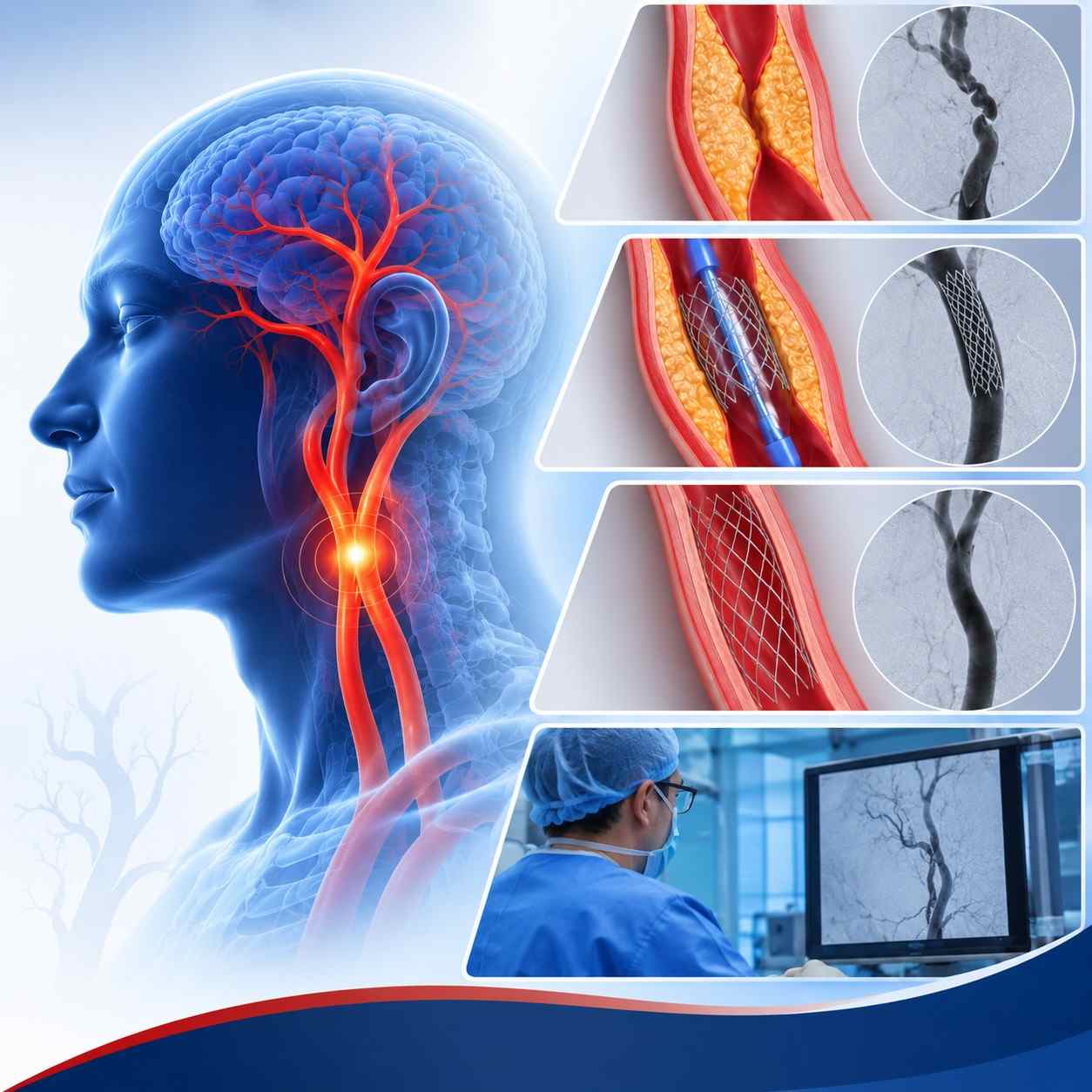

Carotid artery stenting is an image-guided, minimally invasive treatment for selected patients with significant narrowing of the carotid artery. The procedure places a small mesh-like stent inside the narrowed artery to help restore the artery's lumen and improve blood flow to the brain.
However, carotid artery stenting is not automatically the best treatment for every person with carotid stenosis. The decision between stenting, carotid endarterectomy, and medical treatment depends on factors such as the degree of narrowing, whether the patient has recently experienced a TIA or stroke, age, vascular anatomy, previous neck surgery or radiation, and overall surgical risk. Current guidelines emphasise individualised treatment selection.
Carotid artery stenting is a minimally invasive procedure used in selected patients with significant carotid artery narrowing. A catheter is guided through the blood vessels to the narrowed carotid artery, where a stent is deployed to help keep the artery open.
The goal is to reduce the risk of stroke caused by carotid artery disease. Not everyone with carotid narrowing needs a stent. Treatment may instead involve medical therapy, carotid endarterectomy, or careful monitoring, depending on the patient's symptoms, degree of stenosis, anatomy and overall risk.
| Feature | Carotid Artery Stenting |
|---|---|
| Treatment type | Minimally invasive endovascular procedure |
| Main condition | Carotid artery stenosis |
| Main goal | Reduce stroke risk in appropriately selected patients |
| Specialist | Interventional specialist / vascular team |
| Imaging | Duplex ultrasound, CT/MR angiography and catheter angiography as appropriate |
| Access | Usually through a small catheter entry site |
| Anaesthesia | Usually local anaesthesia, with sedation when appropriate |
| Stent | Expandable mesh-like device |
| Hospital stay | Depends on individual circumstances |
| Follow-up | Clinical and vascular imaging follow-up |
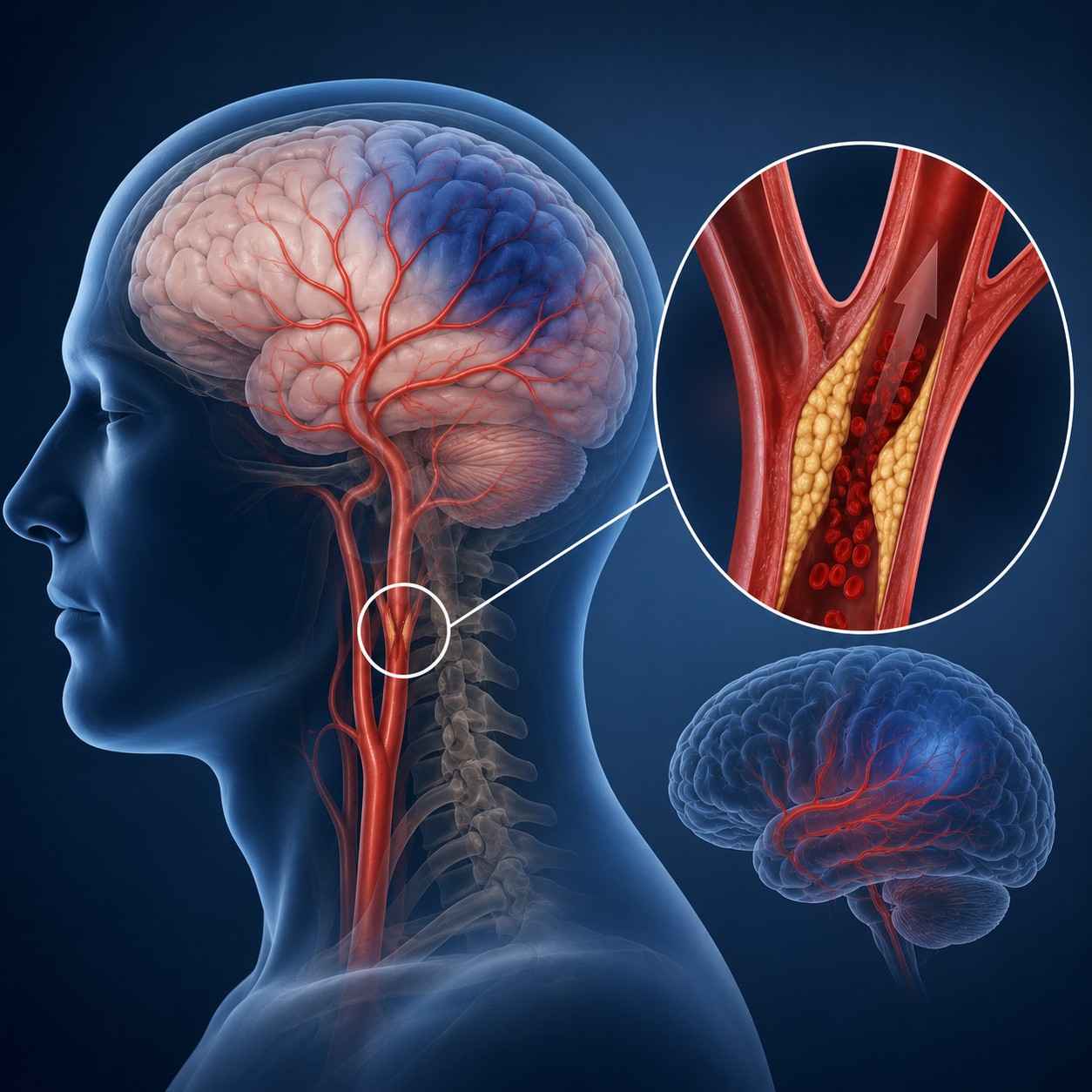
The carotid arteries are major blood vessels in the neck that supply blood to the brain.
When fatty plaque builds up inside the artery, the vessel can become narrowed. This is called carotid artery stenosis.
In selected patients, carotid artery stenting can be used to treat the narrowing.
A catheter is guided to the affected artery under live X-ray imaging. A stent is then expanded across the narrowed section, creating a scaffold that helps maintain the artery's opening.
The procedure does not remove the plaque in the same way as surgery. Instead, the stent helps maintain the lumen and improve blood flow.
Carotid artery stenosis means narrowing of one or both carotid arteries, usually because of atherosclerotic plaque.
The condition can be:
This distinction is important because the potential benefit and urgency of revascularisation differ between symptomatic and asymptomatic patients.
A narrowed carotid artery can contribute to stroke in several ways.
Plaque may:
A TIA can sometimes be an early warning sign.
Possible sudden neurological symptoms include:
These symptoms require urgent medical assessment. Do not wait for a routine appointment.
Carotid artery stenting may be considered for appropriately selected patients with significant carotid stenosis, particularly when revascularisation is indicated and stenting is a suitable alternative to surgery.
Factors considered include:
Guidelines emphasise that the choice between carotid endarterectomy and carotid stenting should be individualised rather than based on the percentage of narrowing alone.
No.
Some patients may benefit more from:
This may include appropriate antiplatelet therapy, cholesterol management, blood-pressure control, diabetes management, smoking cessation, diet and physical activity.
A surgical procedure that removes plaque through an incision in the neck.
A catheter-based alternative for appropriately selected patients.
The decision should be made after reviewing vascular imaging and the patient's neurological and medical history.
Before treatment, the medical team may review:
The imaging helps determine:
A careful assessment is particularly important because carotid intervention carries a risk of stroke around the time of the procedure.
The detailed procedural technique can be covered in a dedicated Carotid Artery Stenting Procedure page.
At a high level:
The patient is monitored and the vascular access area is prepared.
Local anaesthesia is generally used at the access site. Sedation may be used when appropriate.
A thin catheter is introduced into the arterial system and guided toward the carotid artery using live imaging.
Angiography helps confirm the location and severity of the narrowing.
An embolic protection strategy may be used when appropriate to reduce the risk of debris travelling toward the brain.
The stent is positioned across the narrowed segment and expanded.
Imaging confirms the treated artery and evaluates blood flow.
The treatment is performed through catheter access rather than a large neck incision.
The stent provides an internal scaffold to maintain the artery's opening.
Carotid stenting can be an alternative to carotid endarterectomy for appropriately selected patients.
Because there is no conventional neck incision, recovery may be quicker for some patients.
Certain anatomical or medical factors can make catheter-based treatment particularly relevant.
However, less invasive does not mean risk-free, and carotid stenting is not automatically preferable to endarterectomy. Current evidence supports selecting the procedure according to the individual patient.
| Factor | Carotid Stenting | Carotid Endarterectomy |
|---|---|---|
| Approach | Catheter-based | Open surgical |
| Access | Arterial access | Neck incision |
| Plaque | Compressed/contained by stent | Surgically removed |
| Anaesthesia | Usually local ± sedation | Local/regional or general depending on case |
| Recovery | Often relatively quick | Surgical recovery required |
| Stroke risk | Important consideration | Important consideration |
| Restenosis | Can occur | Can occur |
| Best option | Depends on patient | Depends on patient |
Important: In many patients with recently symptomatic carotid stenosis, carotid endarterectomy remains the preferred revascularisation approach when the patient is an appropriate surgical candidate. Carotid stenting is an important alternative in selected patients.
This distinction is important for a medically accurate service page and avoids presenting stenting as universally superior to surgery.
After carotid stenting, patients are monitored for neurological changes, blood-pressure changes and vascular-access complications.
Depending on the clinical situation, observation may continue overnight or longer.
After discharge, patients usually need:
Follow-up imaging is important to assess the treated artery and monitor for recurrent narrowing.
Carotid artery stenting is an established procedure, but it carries potential risks.
These can include:
The most important concern around carotid intervention is stroke occurring during or soon after treatment. This is why patient selection, imaging, experienced operators and appropriate embolic protection are important.
It is a minimally invasive procedure in which a stent is placed inside a narrowed carotid artery to help maintain the artery's opening and improve blood flow.
It is an endovascular procedure rather than conventional open surgery. A catheter is used to reach the carotid artery.
Not universally. The choice between carotid stenting and carotid endarterectomy depends on age, symptoms, anatomy, surgical risk and other individual factors.
No. Some patients are managed with medical treatment and monitoring, while others may be candidates for surgery or stenting.
Yes. Significant carotid disease can contribute to ischemic stroke or TIA through plaque-related embolisation or impaired blood flow.
Yes. Some people have substantial narrowing without noticeable neurological symptoms, which is why treatment decisions should be based on appropriate vascular assessment rather than symptoms alone.
A carotid stent is intended as a long-term implant. However, patients require ongoing medical management and follow-up because restenosis or disease progression can occur.
Patients are generally prescribed antiplatelet and cardiovascular risk-reduction treatment according to their individual clinical plan. Do not stop or change these medicines without speaking to your treating doctor.
Seek emergency medical attention immediately. Sudden facial drooping, arm or leg weakness, speech difficulty, or sudden vision loss can be signs of stroke or TIA.
For carotid artery disease, treatment should be planned around the patient's individual anatomy and stroke risk rather than using a one-size-fits-all approach.
At Citi Vascular Centre, Hyderabad, patients can undergo specialist vascular assessment and image-guided treatment planning, with access to appropriate vascular imaging and interventional expertise.
Our approach focuses on:
If you have been diagnosed with carotid artery narrowing, a previous TIA or stroke, or an abnormal carotid Doppler/CT angiography report, specialist evaluation can help determine whether medical treatment, carotid endarterectomy, carotid stenting, or observation is appropriate.
Citi Vascular Centre, Hyderabad
73375 83901
Bring your previous carotid Doppler, CT angiography/MR angiography, brain scans and medication list to the consultation if available.
| Factors | Carotid Endarterectomy | Carotid Stenting |
|---|---|---|
| Approach | Open Surgical | Catheter Based |
Carotid Artery Stenting symptoms may vary with different stages:
Early stage – Mild/No obvious symptoms
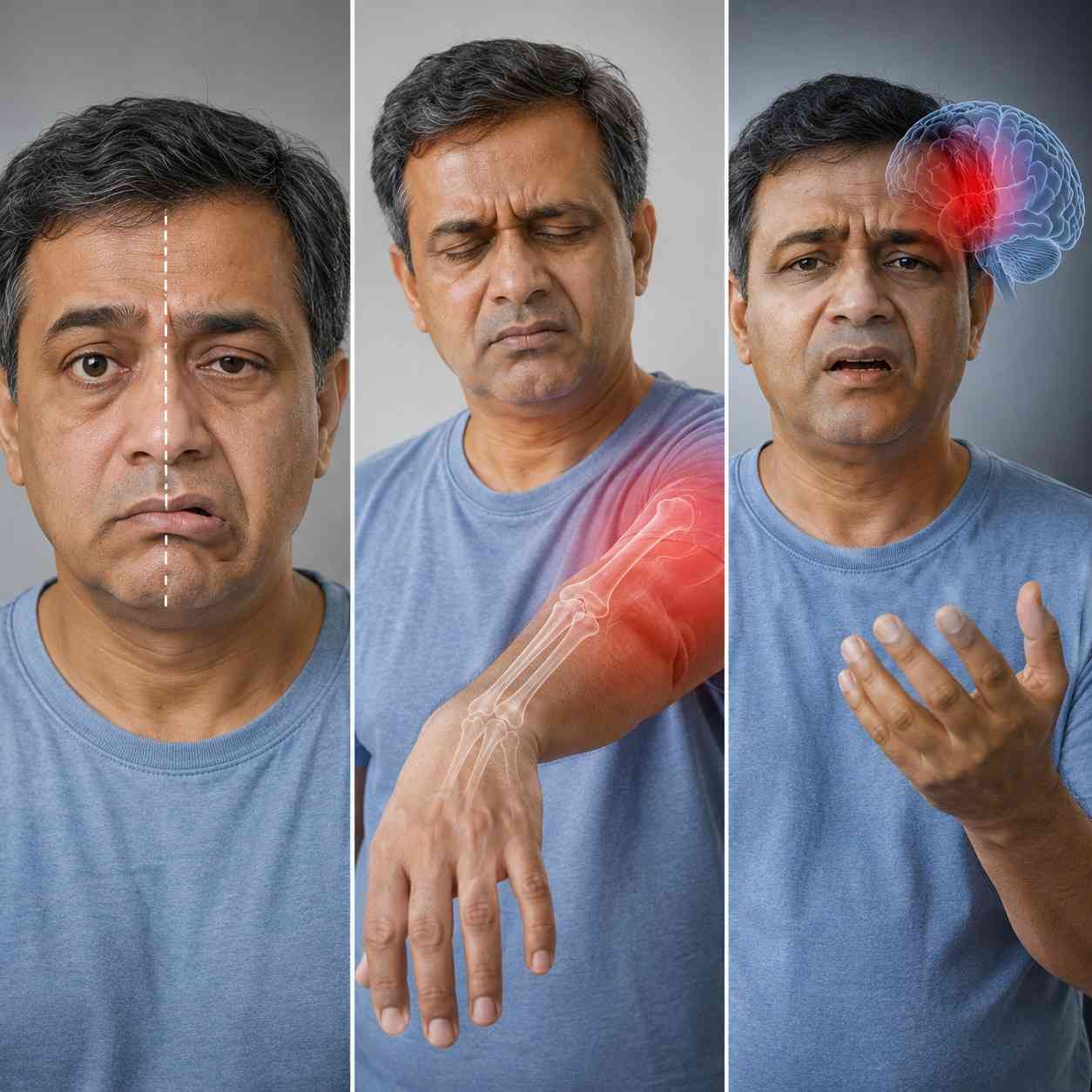
Advanced stage – Stroke warning signs
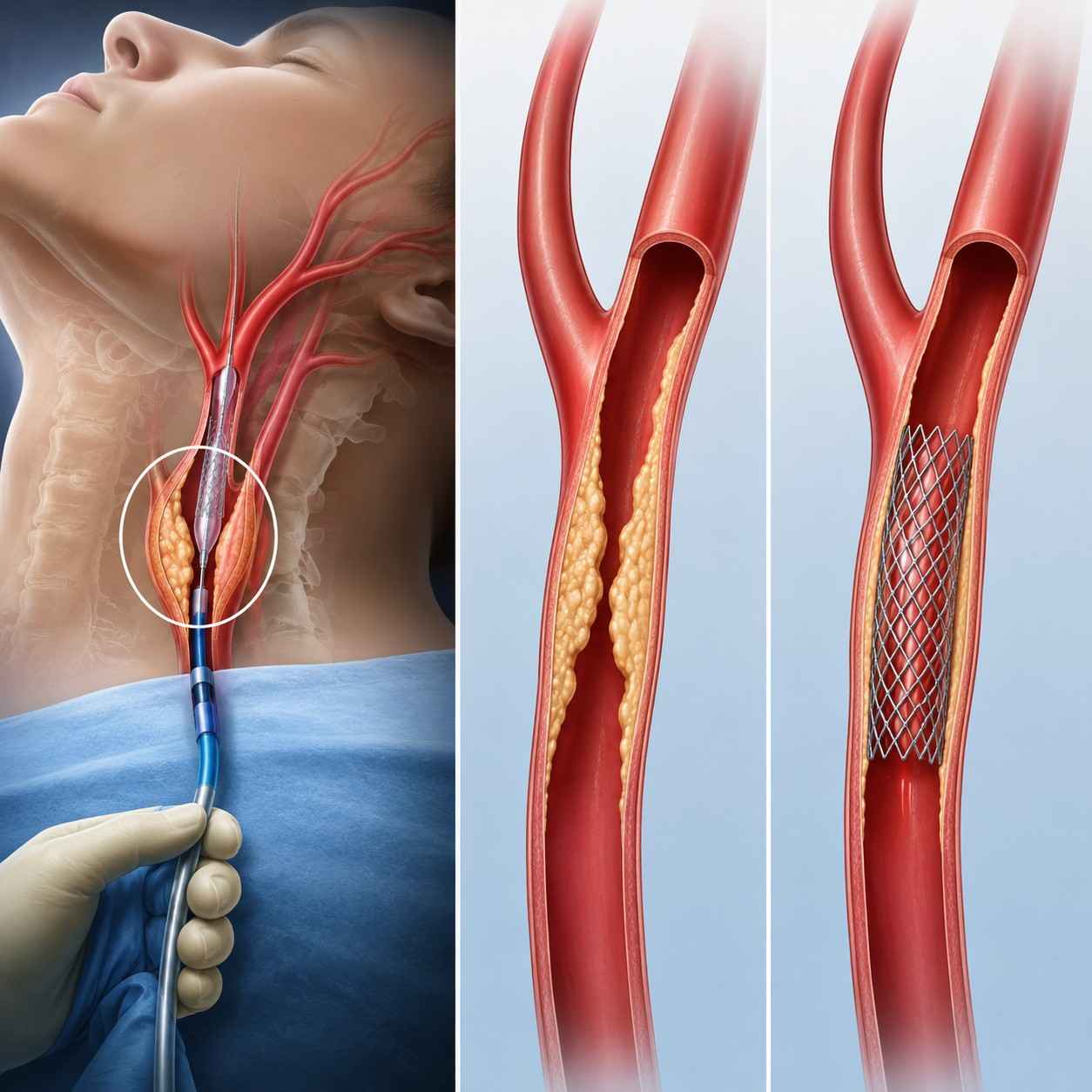
Treatment stage – Carotid Artery Stenting Before ? narrowed artery After ? improved blood flow