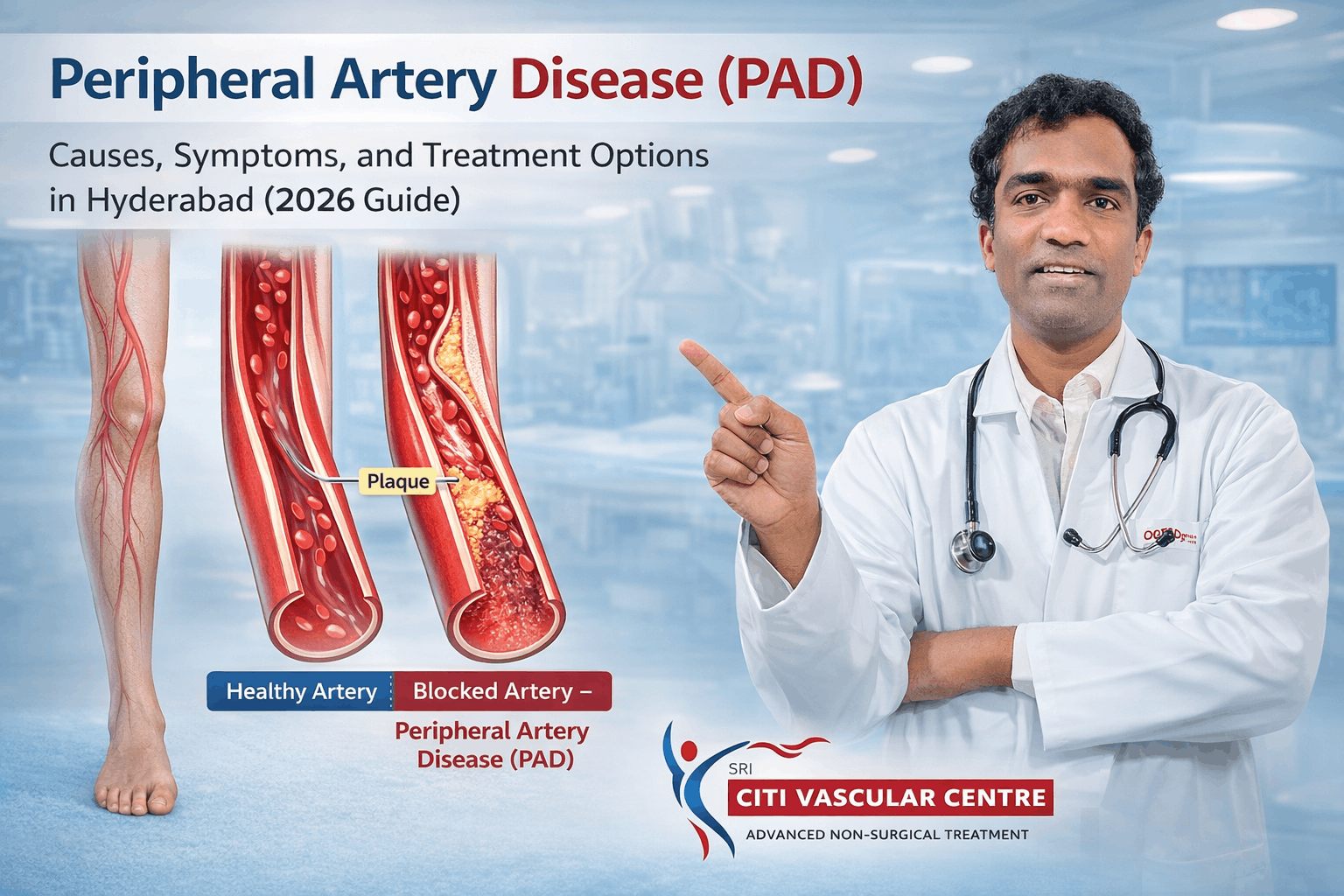
Peripheral Artery Disease (PAD) is no longer a “rare” condition—it’s quietly becoming a major health concern in Hyderabad. Thanks to changing lifestyles, rising diabetes rates, smoking habits, and longer life expectancy, PAD cases are climbing fast. And honestly, that’s why PAD treatment in Hyderabad is gaining serious attention in 2026.
Hyderabad has emerged as a hub for advanced vascular care, offering minimally invasive procedures, experienced vascular intervention Radiologists, and world-class hospitals like Citi Vascular Hospital, KPHB. Early diagnosis and timely treatment are helping patients avoid severe complications such as limb loss, ulcers, rest pain and even heart attacks.
So, if leg pain, numbness, or slow-healing wounds are slowing you down, this guide is for you.
Book your Appointment here: | Appoinment: |Call +91-7032508468| Whatsapp:+91-7337583901
Peripheral Artery Disease is a circulatory condition where narrowed or blocked arteries reduce blood flow—usually to the legs and feet. It’s mainly caused by atherosclerosis, a buildup of fatty plaques inside the arteries.
Your legs aren’t getting enough oxygen-rich blood, and that’s a big problem.
Diabetes (major risk factor in India)
Smoking
High blood pressure
High cholesterol
Obesity
Aging (especially 50+)
Family history of peripheral vascular disease
According to global studies, nearly 1 in 5 people over 60 may show signs of PAD—many without even knowing it.
PAD symptoms often creep in quietly. At first, they’re mild. Then suddenly—boom—they’re impossible to ignore.
Leg pain while walking (claudication)
Cramping in calves, thighs, or hips
Cold feet or legs
Numbness or weakness
Non-healing foot ulcers
Skin discoloration
Hair loss on legs
Rest pain (pain even when lying down)
Gangrene (in severe cases)
⚠️ Important: PAD is also a strong warning sign for heart attack and stroke risk.
PAD treatment isn’t a one-size-fits-all deal. It depends on disease severity, lifestyle factors, and overall health.
Doctors use:
ABI (Ankle-Brachial Index)
Doppler Ultrasound
CT Angiography
Digital Subtraction Angiography (DSA)
Your vascular specialist evaluates:
Blockage severity
Diabetes control
Smoking status
Wound or ulcer presence
Treatment may be medical, minimally invasive, or surgical.
Most modern PAD treatments are:
Minimally invasive
Short hospital stays
Faster recovery times
Here’s a clear breakdown of PAD treatment options in Hyderabad:
Best for early-stage PAD:
Smoking cessation
Diabetes & BP control
Blood thinners
Cholesterol-lowering medications
Supervised walking programs
Most preferred in 2026:
Peripheral Balloon Angioplasty
Peripheral Stent placement
Drug-coated balloons angioplasty
Drug Eluting Peripheral Stents
Atherectomy (plaque removal)
✔ Less pain
✔ Small incision
✔ Faster healing
For severe or complex blockages:
Bypass surgery
Endarterectomy
Let’s be real—when it comes to blood vessels, experience matters.
Dedicated vascular-only hospital
Highly experienced vascular Intervention Radiologist
Advanced cath labs & imaging
Limb salvage expertise
Personalized care for diabetic patients
High success rates with minimally invasive PAD treatment
Location Advantage: KPHB is easily accessible from Kukatpally, Miyapur, Hitech City, and surrounding areas.
|
Treatment Type |
Invasiveness |
Recovery Time |
Best For |
|
Medications |
Non-invasive |
Immediate |
Early PAD |
|
Angioplasty |
Minimally invasive |
1–2 days |
Moderate PAD |
|
Stenting |
Minimally invasive |
2–3 days |
Localized blockage |
|
Bypass Surgery |
Invasive |
1–2 weeks |
Severe PAD |
|
Who Should Be Screened? |
Rationale |
|
Adults over 65 |
Age is a primary risk factor for PAD. |
|
Adults aged 50-64 with risk factors (e.g., smoking, diabetes) |
The presence of risk factors accelerates disease development. |
|
Adults under 50 with diabetes and one other risk factor |
Diabetes significantly increases PAD risk at a younger age. |
|
Anyone with known atherosclerotic disease in another area (e.g., coronary artery disease) |
Plaque buildup is often a systemic issue. |
Symptoms Present?
↓
PAD Diagnosis Confirmed?
↓
Mild PAD → Medications + Lifestyle Changes
↓
Moderate PAD → Angioplasty / Stenting
↓
Severe PAD → Bypass Surgery / Hybrid Procedure
Early diagnosis means simpler treatment, often without surgery, and far better limb-salvage outcomes.
Choose a Dedicated Vascular Center (Not General Care)
Control Diabetes Like Your Limbs Depend on It (They Do!)
Quit Smoking(PAD treatment + smoking = poor results.)
Prefer Minimally Invasive Treatment When Eligible
Walk till mild pain, rest, and repeat—consistency beats intensity.
Take Medications Exactly as Prescribed
Any non-healing wound for more than 7–10 days needs vascular evaluation.
Treat PAD as a whole-body vascular condition, not just a leg problem.
A. PAD can lead to chronic pain, non-healing ulcers, infections, limb amputation, heart attack, or stroke.
A. Most modern treatments are minimally invasive and performed under local anesthesia—pain is minimal.
A. Angioplasty usually takes 30–90 minutes, with discharge in 1–2 days.
A. Yes, if lifestyle changes aren’t followed. Regular follow-ups and medication are crucial.
A. Absolutely. Diabetes significantly increases PAD risk, especially in Indians.
Book your Appointment here: | Appoinment: |Call +91-7032508468| Whatsapp:+91-7337583901