LAST MEDICALLY REVIEWED:
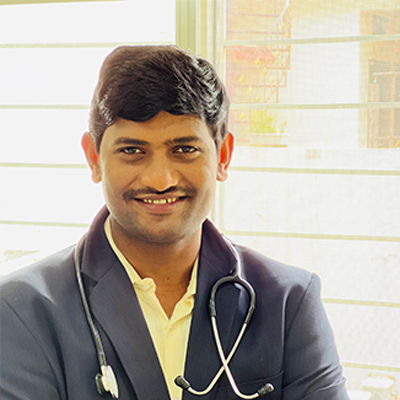
September 2026 — Dr. Shaileshkumar Garge
MBBS, MD (Mumbai), DNB (Delhi), FRCR (UK), FNVIR (CMC Vellore), EBIR (Spain)
Director & Chief Vascular Physician | Sr Consultant Vascular Interventional Radiologist
Citi Vascular Hospital, KPHB Colony, Road No. 1, Hyderabad, Telangana 500072
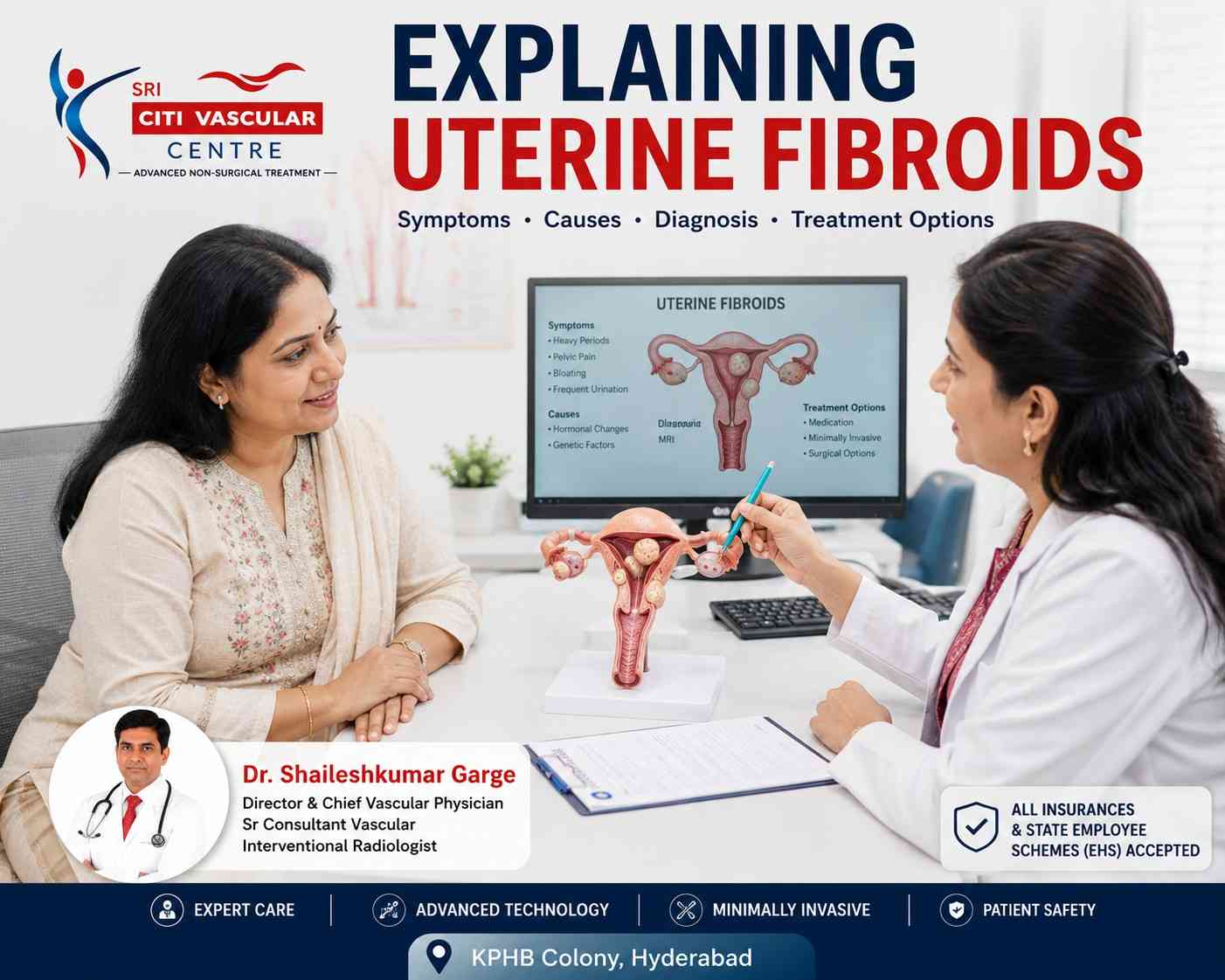
Uterine fibroids are non-cancerous growths in the uterus that affect 1 in 3 women by age 50. They can cause heavy periods, pelvic pain, bloating, and fertility problems — or no symptoms at all. Treatment options range from medications and UAE/UFE (no surgery) to myomectomy or hysterectomy, depending on fibroid size, number, and your fertility goals.This page answers the 50 most commonly asked questions about uterine fibroids — covering symptoms, causes, diagnosis, treatment, fertility, UAE/UFE, cost in Hyderabad, and more — reviewed by Dr. Shaileshkumar Garge, Interventional Radiologist, Citi Vascular Hospital, KPHB
Quick Answer:
|
Quick Facts: Uterine Fibroids at a Glance |
|
|
How common? |
1 in 3 women by age 50; more common in women aged 30–50 |
|
Are they cancerous? |
No — fibroids are almost always benign (non-cancerous) |
|
Main symptoms |
Heavy periods, pelvic pain, bloating, frequent urination, back pain |
|
Can they affect fertility? |
Yes — submucosal and large fibroids can reduce fertility |
|
Best non-surgical treatment |
UAE/UFE — treats all fibroids, same-day discharge, 85–90% success |
|
Cost in Hyderabad |
₹1,20,000 – ₹2,80,000 for UAE | ₹80,000 – ₹2L for myomectomy |
|
Specialist |
Dr. Shaileshkumar Garge — FRCR (UK), FNVIR (CMC Vellore), Citi Vascular KPHB |
|
Appointment |
Call +91-73375 83901 | Same-day appointments Mon–Sat |
Get Expert Uterine Fibroid Questions Answered in Hyderabad
Citi Vascular Hospital, KPHB — Dr. Shaileshkumar Garge | 800+ UFE Procedures Same-Day Discharge
+91-73375 83901 | WhatsApp Now | citivascularcentre.com |
Rated 4.9/5 by 639+ patientsTransparent Pricing | Insurance Assistance | No Hidden Charges | Mon–Sat, 9 AM–6 PM
About Fibroids
Symptoms
Causes
Diagnosis
Fertility & Pregnancy
Treatment Option
UFE/UAE FAQ’s
Surgery
Cost & Insurance
Prevention
Real Patient Questions
Hyderabad Local FAQ’s
Summary & Final Thoughts
Q1: What are uterine fibroids?
A: Uterine fibroids are non-cancerous (benign) muscular tumours that grow in or around the walls of the uterus. They range from the size of a pea to larger than a grapefruit. Fibroids are extremely common — affecting up to 1 in 3 women by age 50 — and are one of the most frequent reasons women seek gynaecological care.
Q2: Are uterine fibroids cancerous?
A: No. Uterine fibroids are almost always benign (non-cancerous). The risk of a fibroid transforming into a malignant tumour (leiomyosarcoma) is extremely rare — occurring in fewer than 1 in 1,000 cases. However, any rapid growth or unusual symptoms should always be evaluated promptly by a specialist.
Q3: What are the different types of fibroids?
A: Fibroids are classified by location: submucosal (inside the uterine cavity — most likely to affect fertility and bleeding), intramural (within the uterine wall — most common type), subserosal (on the outer uterine surface), and pedunculated (attached by a stalk). Treatment approach depends heavily on fibroid type and location.
Q4: How common are uterine fibroids?
A: Uterine fibroids are the most common benign tumours in women of reproductive age. Up to 70–80% of women will develop fibroids by age 50, though many have no symptoms. In India, fibroids account for a large proportion of gynaecological referrals, particularly in women between 30 and 50 years of age.
Q5: Can fibroids disappear naturally?
A: Fibroids rarely disappear completely on their own, but they often shrink significantly after menopause when oestrogen levels fall. Small fibroids may stabilise or reduce in size without treatment. Larger symptomatic fibroids typically require treatment — UAE/UFE, myomectomy, or medication — as they are unlikely to resolve naturally in premenopausal women.
Q6: Can fibroids turn into cancer?
A: Fibroids turning into cancer (leiomyosarcoma) is extremely rare — occurring in less than 0.1% of cases. The presence of fibroids does not increase a woman's overall risk of uterine cancer. However, any fibroid that grows rapidly, especially after menopause, should be investigated urgently with MRI and specialist evaluation.
Q1: What are the symptoms of uterine fibroids?
A: Common fibroid symptoms include heavy or prolonged menstrual bleeding, pelvic pain or pressure, frequent urination, bloating, lower back pain, pain during intercourse, and difficulty emptying the bowel. However, many women have fibroids with no symptoms at all. Symptom severity depends on the number, size, and location of fibroids in the uterus.
Q2: Why do fibroids cause heavy bleeding?
A: Fibroids — especially submucosal fibroids inside the uterine cavity — increase the surface area of the uterine lining, disrupt normal blood vessel formation, and interfere with uterine contractions that normally slow menstrual bleeding. This results in heavier, longer, or more irregular periods, often leading to anaemia if left untreated.
Q3: Can fibroids cause weight gain?
A: Yes. Large fibroids or multiple fibroids can add measurable physical weight — some fibroids grow to the size of a melon and may weigh several kilograms. Additionally, fibroids can cause bloating and a distended abdomen that resembles weight gain. Treating and shrinking fibroids often results in a visible reduction in abdominal size.
Q4: Can fibroids cause bloating?
A: Yes. Fibroids — especially large or multiple ones — press on surrounding abdominal organs, causing a feeling of fullness, abdominal distension, and bloating. Many women describe their abdomen looking 3–4 months pregnant. This type of bloating does not improve with diet changes and is relieved only when the fibroids are treated and shrink.
Q5: What does fibroid pain feel like?
A: Fibroid pain varies widely. It can feel like a dull, heavy pelvic pressure, sharp stabbing cramps during periods, a constant ache in the lower back or pelvis, or pain during intercourse. A pedunculated fibroid twisting on its stalk can cause sudden severe pain. Pain typically worsens during menstruation but may be present throughout the month.
Q6: Can fibroids cause leg pain?
A: Yes. Large fibroids can compress the sciatic nerve or blood vessels in the pelvis, causing radiating pain that travels down one or both legs — a condition sometimes called 'fibroid sciatica'. Women may also experience numbness, tingling, or heaviness in the legs. This symptom often improves significantly after fibroid treatment.
Q7: Can fibroids cause fatigue?
A: Yes. Chronic heavy menstrual bleeding caused by fibroids frequently leads to iron-deficiency anaemia — a major cause of fatigue, weakness, dizziness, and shortness of breath. Even without anaemia, the pain and disruption from fibroids affects sleep quality and daily energy levels. Treating fibroids typically resolves anaemia-related fatigue within 2–3 menstrual cycles.
Q8: Can fibroids cause dizziness?
A: Yes — fibroid-related dizziness is usually linked to iron-deficiency anaemia caused by heavy menstrual bleeding. When the body loses large amounts of blood each cycle, haemoglobin levels drop, reducing oxygen delivery to the brain. This causes dizziness, lightheadedness, and fatigue. A full blood count (CBC) will confirm whether anaemia is the underlying cause.
Q9: Can fibroids cause abdominal swelling?
A: Yes. Large uterine fibroids can cause visible abdominal swelling, making the abdomen appear 4–5 months pregnant. This is due to the physical size of the fibroids and their effect on surrounding organs. The swelling typically reduces gradually over 3–6 months after UAE/UFE treatment as fibroids shrink. Many women report a significant change in clothing size post-treatment.
Q10: What happens if fibroids are not treated?
A: Untreated fibroids can continue to grow and worsen over time. Potential consequences include severe anaemia from heavy blood loss, worsening pelvic pain, urinary complications (retention or frequency), reduced fertility, complications in pregnancy, and — rarely — compression of adjacent organs. While fibroids are not life-threatening, untreated symptoms can seriously impact quality of life.
Q1: What causes uterine fibroids?
A: The exact cause of fibroids is unknown, but hormones — particularly oestrogen and progesterone — play a key role, as fibroids tend to grow during reproductive years and shrink after menopause. Genetic factors, family history, and excess body weight also contribute. Black women are 2–3 times more likely to develop fibroids than other women.
Q2: Are fibroids hereditary?
A: Yes. Women with a mother or sister who has had fibroids are significantly more likely to develop them. Studies show a strong genetic component — if your first-degree female relative had fibroids, your risk is approximately 2.5 times higher than average. Genetic mutations in specific chromosomes have also been linked to fibroid development
Q3. Can stress cause fibroids?
Stress does not directly cause fibroids, but chronic stress may influence hormone levels and symptom severity.
Q1: How are uterine fibroids diagnosed?
A: Fibroids are most commonly diagnosed by pelvic ultrasound, which can detect fibroid size and location. MRI is the gold standard for detailed planning — it maps fibroid number, type, blood supply, and relationship to the uterine cavity. Other tests include hysteroscopy (to view inside the uterus), blood tests for anaemia, and saline infusion sonography.
Q2: What is the best scan for fibroids?
A: MRI (Magnetic Resonance Imaging) is the most accurate scan for uterine fibroids. It provides detailed information about fibroid size, number, type (submucosal, intramural, subserosal), and blood supply — essential for treatment planning, especially before UAE/UFE. Ultrasound is the usual first step and is widely available, but MRI gives far more precise pre-treatment information.
Q3: Can fibroids be detected by a blood test?
A: There is no specific blood test to detect fibroids. However, blood tests are important in fibroid management: a full blood count (CBC) checks for anaemia caused by heavy bleeding; FSH and LH tests assess hormonal status; and kidney function tests are needed before UAE/UFE due to contrast dye use. Imaging remains the only way to confirm and measure fibroids.
Q4: Do all fibroids need treatment?
A: No. Small fibroids that cause no symptoms do not require treatment — only regular monitoring with ultrasound every 6–12 months. Treatment is recommended when fibroids cause heavy bleeding, anaemia, significant pain, pressure symptoms, fertility problems, or when they are growing rapidly. The decision should be individualised based on symptoms, fibroid size, location, and the patient's reproductive plans.
Q5: Which doctor treats fibroids?
A: Fibroids are treated by gynaecologists (for surgical options like myomectomy and hysterectomy) and interventional radiologists (for UAE/UFE). For the best outcome, a multidisciplinary approach is ideal. In Hyderabad, Dr. Shaileshkumar Garge at Citi Vascular Hospital, KPHB, specialises in UAE/UFE — a non-surgical fibroid treatment — with 12+ years' experience and 800+ procedures performed.
Q1: Can I get pregnant with fibroids?
A: Yes — many women with fibroids conceive and have healthy pregnancies. However, fibroids in or near the uterine cavity (submucosal type) can interfere with implantation or increase miscarriage risk. Intramural fibroids larger than 4–5 cm may also affect fertility. A specialist evaluation with MRI and fertility workup helps determine whether fibroid treatment is needed before trying to conceive.
Q2: Which fibroids affect fertility the most?
A: Submucosal fibroids — those that protrude into the uterine cavity — have the greatest negative impact on fertility and implantation. They distort the uterine lining, interfere with sperm movement, and prevent embryo attachment. Intramural fibroids larger than 4 cm can also reduce fertility. Subserosal fibroids on the outer wall generally have the least impact on conception.
Q3: Do fibroids affect IVF success?
A: Yes. Submucosal fibroids significantly reduce IVF success rates by distorting the uterine cavity and impairing embryo implantation — studies show IVF success rates can be 40–50% lower in women with submucosal fibroids. Most fertility specialists recommend treating submucosal fibroids before IVF. Subserosal fibroids generally have less impact on IVF outcomes.
Q4: Is pregnancy possible after UFE/UAE?
A: Yes — pregnancy after UFE/UAE is possible, and successful pregnancies have been reported. However, UFE may reduce ovarian reserve in some women, and the uterine muscle may be affected by the procedure. Women who are planning a future pregnancy should discuss this with both their interventional radiologist and fertility specialist before choosing UFE over myomectomy.
Q5: Can fibroids grow during pregnancy?
A: Yes — fibroids can grow during pregnancy due to elevated oestrogen and progesterone levels, particularly in the first trimester. However, about 70% of fibroids remain stable or even shrink during pregnancy. Growth is most common in fibroids larger than 5 cm. Regular monitoring with ultrasound is recommended for pregnant women known to have fibroids.
Q6: Are fibroids dangerous during pregnancy?
A: Most women with fibroids have normal pregnancies. However, fibroids — especially large or multiple ones — are associated with higher risks of miscarriage, preterm labour, placental abruption, foetal growth restriction, and caesarean section. The risk depends on fibroid size, number, and location. Close obstetric monitoring is essential throughout a pregnancy complicated by fibroids.
Q7: Can fibroids be treated before getting pregnant?
A: Yes — and in some cases it is recommended. If fibroids are distorting the uterine cavity (submucosal type), causing recurrent miscarriage, or significantly reducing fertility, treating them before conception improves outcomes. Hysteroscopic resection or myomectomy preserves the uterus and fertility. UAE/UFE may also be appropriate in selected cases after specialist evaluation.
Q8: Can fibroids cause miscarriage?
A: Yes. Submucosal fibroids that distort the uterine cavity are associated with a higher risk of early miscarriage and recurrent pregnancy loss, as they can prevent proper implantation and placental development. Intramural fibroids larger than 3 cm may also increase miscarriage risk. Treating relevant fibroids before pregnancy can significantly reduce this risk
Q1: What is the best treatment for uterine fibroids?
A: There is no single 'best' treatment — the right choice depends on fibroid size, number, location, symptoms, and fertility goals. UAE/UFE is ideal for women with multiple fibroids wanting to avoid surgery. Myomectomy suits women prioritising fertility. Hysterectomy is the definitive option for women who have completed their family. Medical therapy controls symptoms but does not permanently eliminate fibroids.
Q2: Is UFE better than myomectomy?
A: UAE/UFE and myomectomy have different advantages. UFE treats all fibroids simultaneously without surgery, offers faster recovery (1–2 weeks vs 4–6 weeks), and preserves the uterus. Myomectomy surgically removes individual fibroids and may be preferred for women planning pregnancy soon. For women with multiple fibroids not planning immediate pregnancy, UFE is generally the superior minimally invasive option.
Q3: Is hysterectomy always necessary for fibroids?
A: No — hysterectomy is not always necessary. For many women with symptomatic fibroids, UAE/UFE, myomectomy, or endometrial ablation are effective alternatives that preserve the uterus. Hysterectomy is typically recommended only when other treatments have failed, when fibroids are extremely large, or when the woman has completed her family and prefers a permanent solution.
Q4: Can large fibroids be treated without surgery?
A: Yes. UAE/UFE (Uterine Artery Embolisation) is highly effective for large fibroids — even those larger than 10 cm — and requires no surgical incision. The procedure blocks the fibroid's blood supply through a tiny wrist or groin puncture, causing the fibroid to shrink by 40–70% over 3–6 months. Most patients are discharged within 24 hours.
Q5: Can multiple fibroids be treated at the same time?
A: Yes — this is one of the key advantages of UAE/UFE. Unlike myomectomy, which surgically removes one fibroid at a time, UAE/UFE treats all fibroids simultaneously by blocking their shared blood supply in a single procedure. This makes UAE/UFE particularly advantageous for women with 3, 5, or even 10+ fibroids of different types and locations.
Q6: What medications are used for fibroid treatment?
A: Medications for fibroids include: GnRH agonists (shrink fibroids temporarily before surgery), tranexamic acid (reduces heavy bleeding), NSAIDs (manage pain), combined oral contraceptives, progesterone-releasing IUDs (reduce bleeding), and newer oral options like ulipristal acetate. Medications control symptoms but do not permanently eliminate fibroids — most regrow after medication is stopped.
Q7: What foods should be avoided with fibroids?
A: Foods that may worsen fibroids include those high in oestrogen-disrupting compounds: processed meats, alcohol, refined carbohydrates, high-fat dairy, and foods with added hormones. Excess body fat increases oestrogen production, fuelling fibroid growth. Instead, a diet rich in green vegetables, fruits, legumes, and omega-3 fatty acids may help regulate hormones and reduce inflammation.
Q8: Does vitamin D help fibroids?
A: Research suggests vitamin D deficiency is more common in women with fibroids, and adequate vitamin D levels may help slow fibroid growth by reducing cell proliferation. Studies show women with sufficient vitamin D have smaller and fewer fibroids. Supplementation may be beneficial, especially in women with confirmed deficiency — but it is not a standalone fibroid treatment. Always confirm levels with a blood test first.
Q9: What is the fastest way to shrink fibroids?
A: UAE/UFE (Uterine Artery Embolisation) is the fastest way to begin fibroid shrinkage — the process starts immediately after the procedure. Fibroids typically reduce by 40–50% in size within 3 months and up to 70% by 6 months. GnRH agonists can also temporarily shrink fibroids before surgery. There is no instant non-medical method to shrink fibroids.
Q10: Are fibroids life-threatening?
A: Fibroids are rarely life-threatening directly. However, severe anaemia from chronic heavy bleeding can become medically dangerous if untreated, requiring blood transfusion. Very large fibroids can compress the ureters, potentially affecting kidney function. The risk of fibroid-related malignancy (leiomyosarcoma) is under 0.1%. Most fibroid-related health risks are manageable with timely treatment.
Q1: What is UAE/UFE and how does it work?
A: UAE (Uterine Artery Embolisation) or UFE (Uterine Fibroid Embolisation) is a minimally invasive procedure where a specialist blocks blood supply to fibroids using tiny particles injected through a catheter in the wrist or groin. Deprived of blood, fibroids shrink naturally over 3–6 months. It treats all fibroids simultaneously in 45–90 minutes, with no surgery needed.
Q2: How long does it take fibroids to shrink after UFE?
A: Fibroid shrinkage begins immediately after UAE/UFE as blood supply is cut off. Within 1–3 months, fibroids typically reduce by 25–40% in volume. By 6 months, reduction reaches 40–70%. Menstrual bleeding usually improves within the first 1–2 cycles post-procedure. Maximum shrinkage is usually seen at 6–12 months on follow-up MRI.
Q3: What is post-embolisation syndrome?
A: Post-embolisation syndrome is a common and expected response after UAE/UFE. It includes cramping, mild fever (37.5–38.5°C), fatigue, nausea, and flu-like symptoms for 2–5 days after the procedure. It occurs as fibroids begin to break down. The symptoms are manageable with prescribed pain relief and anti-nausea medication — they are not a sign of complication.
Q4: Can fibroids burst after UFE?
A: Fibroids do not typically 'burst' after UFE. What can happen is that a fibroid becomes necrotic (breaks down) and is expelled from the uterus through the cervix — this is more common with submucosal fibroids. This process is called fibroid expulsion and may be accompanied by cramping and discharge. If this occurs, it should be assessed promptly by a specialist.
Q5: Is UFE safe for women who want children?
A: UFE preserves the uterus, and pregnancy after UFE is possible — with reported live birth rates comparable to untreated women in some studies. However, UFE may slightly reduce ovarian reserve and affect uterine wall integrity. For women with strong immediate fertility goals, myomectomy is generally the first recommendation. UAE/UFE should be discussed with both a fertility specialist and an interventional radiologist.
Q6: What is the success rate of UAE/UFE?
A: UAE/UFE has an 85–90% success rate for symptom relief — particularly for reducing heavy menstrual bleeding, pelvic pressure, and fibroid bulk. Most women experience significant improvement within 2–3 months. About 10–15% of women may need a repeat procedure or additional treatment within 5 years, typically because of new fibroid growth rather than UAE failure.
Q7: How long is recovery after UAE/UFE?
A: Most women return to light activities within 5–7 days after UAE/UFE and resume full normal activities within 1–2 weeks. This is significantly faster than surgical options: myomectomy requires 4–6 weeks' recovery, and hysterectomy 6–8 weeks. Hospital stay is usually same-day or overnight. Fibroid shrinkage and full symptom improvement continue for 3–6 months after the procedure.
Q8: Is UAE/UFE available in Hyderabad?
A: Yes. UAE/UFE is performed in Hyderabad at Citi Vascular Hospital, KPHB Colony, by Dr. Shaileshkumar Garge — FRCR (UK), FNVIR (CMC Vellore), EBIR (Europe) — with 12+ years of experience and over 800 UAE procedures performed. The hospital has a dedicated Cath Lab with advanced fluoroscopy guidance. Same-day appointments are available Monday to Saturday. Call +91-73375 83901.
Q1: What is a myomectomy?
Myomectomy is a surgical procedure that removes uterine fibroids while keeping the uterus intact. It can be performed laparoscopically, hysteroscopically, or as open surgery depending on fibroid size and location. It is the preferred surgical option for women who wish to preserve fertility. Recovery takes 2–6 weeks depending on the surgical approach used.
Q2: What is a hysterectomy?
Hysterectomy is a surgical procedure that removes the uterus permanently, eliminating fibroids and preventing any future recurrence. It can be total (removing uterus and cervix) or partial. It is the only permanent cure for fibroids but ends the ability to conceive. Recovery takes 6–8 weeks. It is recommended when other treatments have failed or are unsuitable.
Q3: Is hysterectomy always necessary for fibroids?
No — hysterectomy is not always necessary for fibroids. Effective alternatives include UAE/UFE (non-surgical, same-day discharge), myomectomy (surgical but uterus-preserving), endometrial ablation, and medication. Hysterectomy is typically considered only when fibroids are very large, symptoms are severe, other treatments have failed, or the patient has completed her family and prefers a permanent solution.
Q1: What is the cost of fibroid treatment in Hyderabad?
A: Fibroid treatment costs in Hyderabad vary by procedure: UAE/UFE costs approximately ₹1,20,000–₹2,80,000; laparoscopic myomectomy ₹1,50,000–₹4,00,000; open myomectomy ₹1,00,000–₹2,50,000; hysterectomy ₹1,50,000–₹4,50,000. Costs depend on fibroid size, number, hospital type, length of stay, and specialist expertise. At Citi Vascular KPHB, all costs are disclosed upfront with no hidden charges.
Q2: Is fibroid treatment covered by insurance in Hyderabad?
A: Yes — most standard health insurance policies in India cover fibroid treatment as it is a recognised medical condition. Coverage applies to UAE/UFE, myomectomy, and hysterectomy in most cases. Patients should check their policy for specific exclusions, obtain a pre-authorisation letter, and confirm cashless facility availability. Citi Vascular Hospital assists with insurance coordination and documentation.
Q3: Is EMI available for fibroid treatment?
A: Yes — EMI (Equated Monthly Instalment) payment options are available at Citi Vascular Hospital, KPHB, for UAE/UFE treatment. This makes fibroid treatment more accessible for patients without insurance coverage or immediate funds. Speak to the hospital's billing team for details on available EMI schemes and no-cost EMI options before your procedure.
Q4: Why does UAE cost less than surgery for fibroids?
A: UAE/UFE typically costs less than surgical options because it avoids general anaesthesia, requires shorter hospital stay (same day vs 3–5 days for surgery), needs no operation theatre time, causes fewer post-operative complications, and allows faster return to normal activities. The total cost of care — including recovery time, medications, and follow-up — is generally lower for UAE than for myomectomy or hysterectomy.
Q: How do I book a fibroid consultation in Hyderabad?
A: You can book a fibroid consultation with Dr. Shaileshkumar Garge at Citi Vascular Hospital, KPHB Colony, Road No. 1, Hyderabad by calling +91-73375 83901 or visiting www.citivascularcentre.com. Same-day and next-day appointments are available Monday to Saturday. The initial consultation includes symptom assessment, review of existing scans, and personalised treatment recommendation.
Q1: Can fibroids be prevented?
There is no guaranteed way to prevent uterine fibroids, but certain lifestyle factors may reduce your risk. Maintaining a healthy body weight is important, as excess fat increases oestrogen production which fuels fibroid growth. Regular exercise, a diet rich in green vegetables and fruit, limiting alcohol, and avoiding red processed meat may also lower risk.
Q2: Can diet help with fibroids?
Yes — diet can play a supportive role in managing fibroids. Foods rich in iron (spinach, lentils, beetroot) help counter anaemia from heavy bleeding. Green vegetables, flaxseeds, and cruciferous vegetables like broccoli help regulate oestrogen levels. Anti-inflammatory foods such as turmeric, berries, and omega-3 rich fish may slow fibroid growth. Avoid processed meat, excess sugar, and alcohol.
Q3: Can exercise help with fibroids?
Yes — regular exercise may help manage fibroid symptoms and slow their growth. Physical activity reduces body fat, which lowers circulating oestrogen levels that drive fibroid development. Exercise also improves pelvic circulation, reduces inflammation, and helps manage stress — a known hormonal disruptor. Aim for 150 minutes of moderate activity per week; avoid high-impact exercise during painful flare-ups.
Q1: I have multiple fibroids and want to avoid hysterectomy — what are my options?
UAE/UFE (Uterine Artery Embolisation) is the most effective non-surgical option for multiple fibroids — it treats all fibroids simultaneously in a single 45–90 minute procedure, with no surgery, no general anaesthesia, and same-day discharge. Other options include laparoscopic myomectomy, GnRH medication to temporarily shrink fibroids, or observation if symptoms are mild. An MRI and specialist consultation with Dr. Shaileshkumar Garge at Citi Vascular, KPHB, will confirm which approach suits your specific fibroid map and fertility goals.
Q1: Where can I get fibroid treatment in Hyderabad?
A: Fibroid treatment in Hyderabad is available at Citi Vascular Hospital, KPHB Colony, Road No. 1, Kukatpally — a dedicated vascular and interventional radiology centre equipped with a Cath Lab for UAE/UFE procedures. The hospital serves women from KPHB, Kukatpally, Miyapur, Ameerpet, Secunderabad, and across Telangana. Call +91-73375 83901 for a same-day consultation.
Q2: Which hospital is best for fibroid treatment in Hyderabad?
A: Citi Vascular Hospital, KPHB, is a specialist interventional radiology centre in Hyderabad with a dedicated Cath Lab for UAE/UFE treatment — the most advanced non-surgical fibroid treatment available. Led by Dr. Shaileshkumar Garge (FRCR UK, FNVIR CMC Vellore), the hospital offers transparent pricing, insurance coordination, same-day discharge, and 800+ completed UAE procedures.
Q3: Which doctor performs UFE in Hyderabad?
A: Dr. Shaileshkumar Garge — Director and Chief Vascular Physician at Citi Vascular Hospital, KPHB — is a leading specialist performing UAE/UFE for fibroids in Hyderabad. His qualifications include FRCR (UK), FNVIR (CMC Vellore), EBIR (Europe), MD (Mumbai), and DNB (Delhi), with over 12 years of dedicated interventional radiology experience and 800+ UAE procedures performed.
Q4: What is the cost of UAE/UFE in KPHB, Hyderabad?
A: UAE/UFE at Citi Vascular Hospital, KPHB, Hyderabad costs approximately ₹1,20,000 to ₹2,80,000 depending on fibroid size, number, and complexity. The cost includes pre-procedure imaging, the procedure itself, hospital stay, medications, and follow-up review. All costs are disclosed transparently before treatment. EMI is available. Call +91-73375 83901 for a personalised quote.
Q5: Is UAE/UFE available in KPHB, Kukatpally, Hyderabad?
A: Yes. UAE/UFE is readily available at Citi Vascular Hospital on Road No. 1, KPHB Colony, Kukatpally, Hyderabad — accessible from Kukatpally, Miyapur, Ameerpet, Balkampet, Mothinagar, and Secunderabad. The hospital operates Monday to Saturday with same-day appointments. Dr. Shaileshkumar Garge performs all UAE procedures using dedicated fluoroscopy-guided Cath Lab infrastructure.
Fibroid FAQ Summary
✅ Fibroids are usually benign
✅ Heavy bleeding is a common symptom
✅ Fertility may be affected in some women
✅ UFE/UAE offers a non-surgical treatment option
✅ Hysterectomy is not always necessary
✅ Most women recover from UFE within days
✅ Multiple treatment options are available
If you have symptoms such as heavy bleeding, pelvic pressure, anemia, or concerns about fertility, early evaluation can help identify the most appropriate treatment option.
Citi Vascular Hospital, KPHB, Hyderabad
+91-73375 83901
Serving patients from Kukatpally, Miyapur, Hitech City, Gachibowli, Madhapur, Secunderabad, and across Telangana.