LAST MEDICALLY REVIEWED:
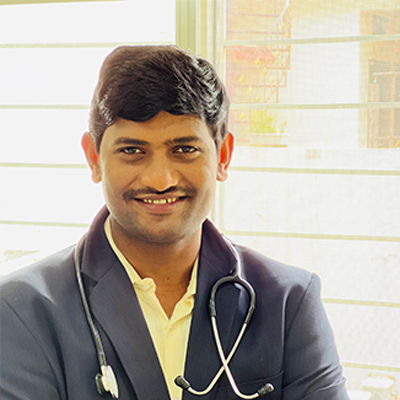
July 2026 — Dr. Shaileshkumar Garge
Citi Vascular Hospital, KPHB Colony, Road No. 1, Hyderabad, Telangana 500072
|
QUICK ANSWER What Is the Best Treatment for a Benign Thyroid Nodule in Hyderabad? Most benign thyroid nodules do not require immediate treatment. Small, asymptomatic nodules are safely monitored with periodic ultrasound. Treatment — minimally invasive thermal ablation or surgery — is recommended when a nodule is growing, causing symptoms (difficulty swallowing, pressure, cosmetic concern), or confirmed benign but symptomatic on biopsy. Dr. Garge FRCR (UK) | Citi Vascular Centre, KPHB, Hyderabad. Call +91-73375 83901. |
A thyroid nodule is one of the most common findings in the neck — and one of the most frequently misunderstood. When a scan report comes back mentioning a thyroid nodule, many patients immediately fear the worst. The reality is more reassuring: the vast majority of thyroid nodules are benign — non-cancerous — and many will never need treatment at all. They are simply a growth within the thyroid gland, the butterfly-shaped endocrine gland at the front of the neck, and their presence does not mean cancer.
That said, benign does not always mean harmless. A thyroid nodule that grows significantly over time, causes difficulty swallowing, creates a visible lump in the neck that concerns you cosmetically, or produces a sensation of pressure — these are situations where the question of treatment becomes clinically relevant. The options have changed significantly over the last decade. Where surgery was once the only definitive treatment for a symptomatic benign nodule, minimally invasive image-guided thermal ablation techniques have now been validated by multiple international studies — allowing nodule shrinkage without removing the thyroid, without general anaesthesia in most cases, and without the thyroid hormone supplementation that surgery often necessitates for life.
This guide explains what benign thyroid nodules are, what causes them, who is at risk, when treatment is and is not necessary, how the diagnosis is made, and what the current treatment options include — from watchful observation to thermal ablation to surgery, and when each is the right choice.
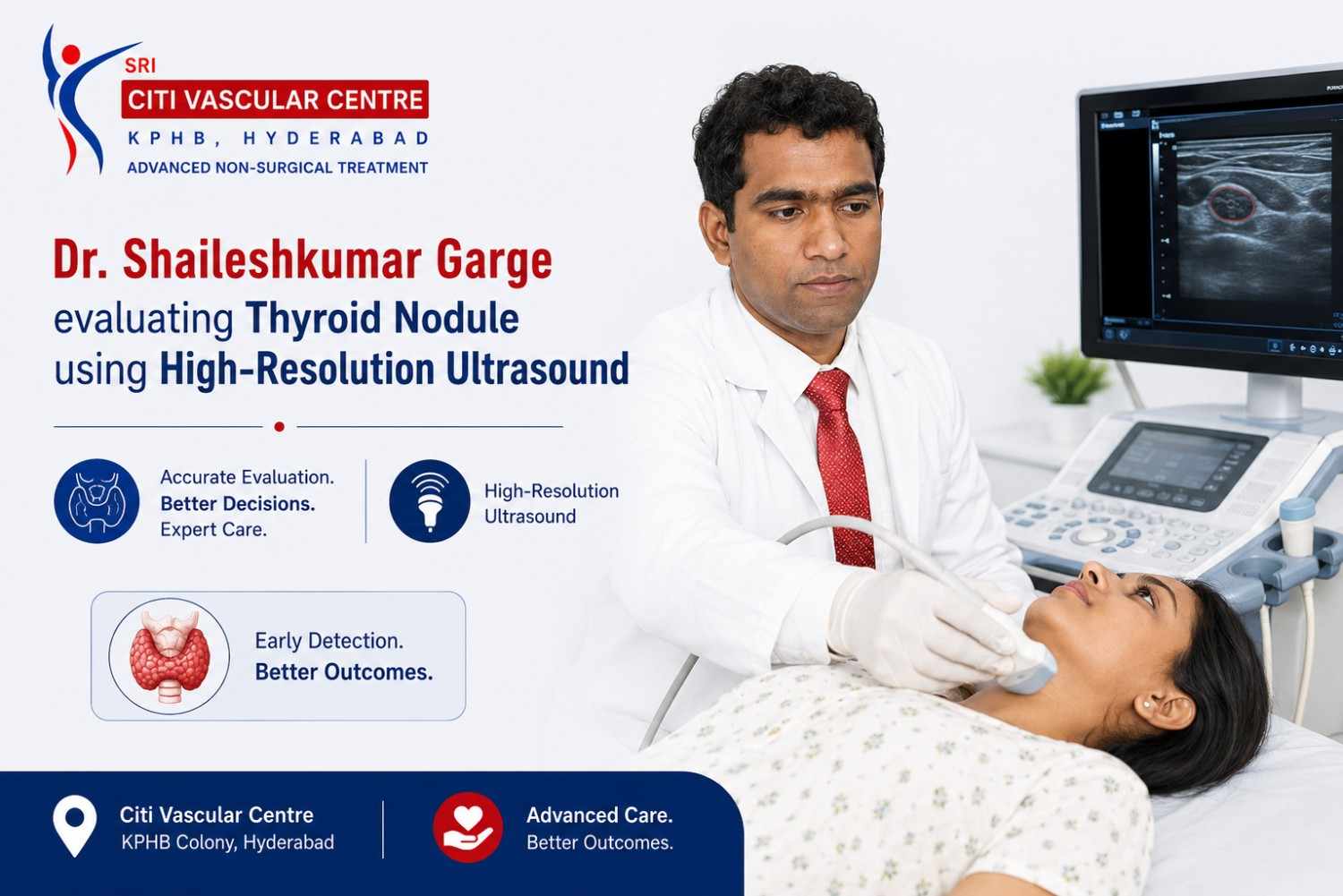
Thyroid Nodule Consultation — Citi Vascular Centre, KPHB, Hyderabad
Call +91-73375 83901 | WhatsApp 73375 83901 | citivascularcentre.com | Mon–Sat 9AM–6PM
|
Feature |
Detail |
|
Condition |
Benign thyroid nodule — non-cancerous growth within the thyroid gland |
|
How Common |
One of the most common clinical findings — detected incidentally in up to 50–60% of adults on ultrasound |
|
Cancer Risk |
Majority of thyroid nodules (>85–90%) are benign on biopsy. Risk stratification is based on ultrasound features and FNAC. |
|
Typical Location |
Within the thyroid gland — front of the neck. May be single (solitary) or multiple (multinodular goitre) |
|
Diagnosis |
Ultrasound (first-line) | FNAC when indicated | Thyroid function blood tests (TSH, T3, T4) | Clinical examination |
|
Most Common Symptoms |
Visible neck swelling | Feeling of a lump | Difficulty swallowing | Neck pressure | Cosmetic concern |
|
When Treatment Is Needed |
Growing nodule | Symptomatic | Cosmetically visible | Patient anxiety after thorough counselling | Confirmed benign but persistent |
|
Treatment Options |
Observation (periodic ultrasound) | Minimally invasive thermal ablation | Surgery (selected cases) |
|
Goal |
Relieve symptoms and reduce nodule volume — while preserving normal thyroid function wherever possible |
|
Recovery |
Observation: no recovery. Ablation: 1–3 days. Surgery: 3–5 days hospital, 2–4 weeks full recovery. |
A benign thyroid nodule is a non-cancerous growth that arises within the thyroid gland. The thyroid is a butterfly-shaped endocrine gland sitting at the front of the neck, just below the larynx, and produces hormones (thyroxine T4 and triiodothyronine T3) that regulate metabolism, heart rate, body temperature, and growth throughout life. When abnormal but non-cancerous tissue grows within the gland — forming a discrete mass distinguishable from the surrounding normal thyroid tissue on imaging — it is called a thyroid nodule.
Thyroid nodules are exceptionally common. High-resolution ultrasound studies consistently find thyroid nodules in up to 50–60% of the adult population examined — most of whom have no awareness of them and experience no symptoms at all. The vast majority are clinically irrelevant and will never cause problems. A small proportion grow, become symptomatic, or require further evaluation to confirm they are not malignant. Understanding which category a nodule falls into is the purpose of the initial diagnostic workup.
Benign thyroid nodules include several distinct subtypes: colloid nodules (the most common — simply an overgrowth of normal thyroid follicular tissue), thyroid adenomas (benign tumours of thyroid follicular cells), thyroid cysts (fluid-filled cavities within the gland — often colloid cysts, sometimes haemorrhagic), and nodules within multinodular goitre (where multiple benign nodules are present within an enlarged gland). Each has slightly different clinical behaviour and ultrasound characteristics, and the management approach may differ accordingly.
Note on thyroid cancer: Thyroid cancer is real and does occur — but it is much less common than benign nodules. The concern about malignancy is addressed through a structured evaluation pathway: ultrasound characterisation using validated classification systems (TIRADS or ACR TIRADS), FNAC when indicated, and thyroid specialist review. At Citi Vascular Centre, KPHB, every thyroid nodule evaluation begins with high-resolution ultrasound and Dr. Garge's clinical assessment before any further investigation or treatment is planned.
The exact cause of thyroid nodule formation is not always identifiable — and for many patients, no single cause is found. The development of a benign thyroid nodule is often a combination of genetic predisposition, hormonal factors, and environmental influences acting on thyroid tissue over many years. Understanding the contributing factors helps explain why some people develop nodules and others do not.
|
Contributing Factor |
How It May Lead to Thyroid Nodules |
|
Age-related glandular changes |
Thyroid tissue gradually develops heterogeneity over time — nodular change is more common in older adults, particularly after age 40 |
|
Iodine deficiency |
Low dietary iodine stimulates excess TSH production, which promotes thyroid cell growth over time and can lead to nodule development or multinodular goitre |
|
Benign thyroid cysts |
Fluid accumulation within the thyroid forms cystic nodules — often after haemorrhage into a pre-existing nodule or follicular degeneration |
|
Thyroid adenoma |
A benign, self-contained tumour of thyroid follicular cells — grows as a single nodule, usually hormone-inactive (cold nodule), rarely causes hyperthyroidism |
|
Chronic thyroid inflammation (Hashimoto's thyroiditis) |
Autoimmune inflammation of the thyroid is strongly associated with nodule development — the inflamed thyroid undergoes structural changes over time leading to nodularity |
|
Family history of thyroid disorders |
Genetic susceptibility to thyroid nodule formation is well established — multiple affected family members increases an individual's risk |
|
Previous radiation to the neck |
External beam radiotherapy to the neck region (for lymphoma, other cancers) increases thyroid nodule risk — both benign and malignant |
|
Gender and hormonal factors |
Thyroid nodules are 3–4 times more common in women than men — oestrogen and other hormonal influences are thought to play a role in thyroid growth |
While thyroid nodules can occur in anyone, certain groups are at higher risk and may benefit from targeted thyroid screening or earlier evaluation when symptoms develop.
|
Risk Group |
Why the Risk Is Higher |
|
Women |
Thyroid nodules are 3–4 times more common in women. Hormonal changes through reproductive life, pregnancy, and menopause all influence thyroid gland activity and growth. |
|
Age > 40 |
Thyroid nodule prevalence increases progressively with age. By age 60, a significant proportion of the population will have at least one detectable thyroid nodule on high-resolution ultrasound. |
|
Family history of thyroid disease |
First-degree relatives with thyroid nodules, goitre, or thyroid autoimmune disease increase individual risk. Genetic factors influence glandular structure and response to hormonal stimulation. |
|
Previous thyroid disease |
Patients with a prior diagnosis of thyroiditis, Graves' disease, or partial thyroid surgery are more likely to develop nodules in residual thyroid tissue |
|
Low iodine intake |
Endemic iodine deficiency — still relevant in some regions of Telangana and Andhra Pradesh — is a well-established driver of multinodular goitre |
|
History of neck radiation |
Radiotherapy to the head and neck region — for lymphoma, nasopharyngeal cancer, or other malignancies — significantly increases the lifetime risk of thyroid nodule development |
|
Multinodular goitre (established) |
Patients who already have a multinodular goitre have higher risk of developing additional nodules and of having one or more nodules grow significantly over time |
The most important clinical fact about thyroid nodules is that most of them cause no symptoms whatsoever. The majority are discovered incidentally — found on an ultrasound ordered for an unrelated neck or carotid problem, or on a CT scan of the chest that includes the lower neck, or during a routine health check. For these patients, the nodule's presence alone is not a reason for concern or for immediate treatment — it is a reason for proper characterisation and monitoring.
When symptoms do develop, they are almost always related to nodule size and position rather than to any chemical or hormonal activity of the nodule. A nodule that remains small (under 2–3cm) and sits within a normally sized thyroid gland will rarely cause symptoms. A nodule that grows to 4cm, 5cm, or larger, or that sits particularly close to the oesophagus or trachea, creates pressure effects that produce the symptoms patients describe.
|
Symptom |
How It Feels |
What It Indicates |
|
Visible neck swelling |
Lump visible at the front of the neck, particularly when swallowing |
Nodule large enough to distort the external contour of the thyroid gland — commonly > 3–4cm |
|
Palpable lump |
A firm or soft mass felt under the skin of the front or side of the neck |
Can be felt at smaller sizes than it can be seen — often the first thing patients notice themselves |
|
Difficulty swallowing (dysphagia) |
Sensation of food 'catching' or needing extra effort to swallow — particularly solids |
Nodule compressing the oesophagus — more common with posterior nodules or very large glands |
|
Neck pressure or tightness |
Sensation of something pressing on the throat, particularly when lying down or turning the head |
Tracheal or oesophageal compression — especially with multinodular goitre and substernal extension |
|
Hoarseness |
Change in voice quality — not very common with benign nodules |
Pressure on the recurrent laryngeal nerve — uncommon with benign nodules, more common with malignant lesions |
|
Cosmetic concern |
Distress about the visible appearance of a neck lump, even if functionally asymptomatic |
A valid indication for treatment discussion — particularly for professionally active patients or those with large visible goitres |
|
Generalised thyroid symptoms (rare) |
Hyperthyroidism symptoms (palpitations, weight loss, heat intolerance) from a functioning or toxic nodule |
Minority of nodules are hormonally active (toxic adenoma) — requires additional evaluation with thyroid scintigraphy |
When to seek assessment: Any persistent, firm, or enlarging neck lump that has been present for more than 4–6 weeks should be assessed by a specialist. Do not wait for symptoms to become severe — early evaluation with ultrasound allows accurate characterisation and rules out the small but important possibility of malignancy before it becomes clinically challenging. Call Citi Vascular Centre: +91-73375 83901.
Not every confirmed benign thyroid nodule requires intervention. The management pathway depends on a combination of the nodule's ultrasound characteristics, FNAC result, size, rate of growth, and whether it is causing symptoms. Dr. Garge's approach at Citi Vascular Centre begins with a thorough evaluation and ends with a management recommendation that is specific to your nodule and your situation — not a generic protocol.
|
Clinical Situation |
Recommended Management |
|
Small benign nodule (< 2cm), FNAC benign, no symptoms |
Observation — periodic ultrasound at 6–12 months to monitor for growth. No intervention required. |
|
Nodule increasing in size (> 20% growth in > 2 dimensions) |
Repeat FNAC recommended. If still benign but growing, consider ablation or surgery depending on size and patient preference. |
|
Benign nodule causing difficulty swallowing, pressure, or discomfort |
Treatment indicated — ablation or surgery depending on size, patient fitness, and nodule characteristics |
|
Benign nodule with significant cosmetic concern |
Valid indication for treatment — thermal ablation is often preferred to preserve thyroid function and avoid surgical scar |
|
Cystic nodule with recurrent fluid accumulation |
Ethanol ablation or thermal ablation after aspiration — prevents recollection without requiring surgery |
|
FNAC result indeterminate (Bethesda III or IV) |
Repeat FNAC or core needle biopsy. Depending on molecular markers and ultrasound features, may proceed to lobectomy for definitive diagnosis. |
|
Toxic (hyperfunctioning) nodule causing hyperthyroidism |
Radioiodine ablation or surgery — thermal ablation emerging but not yet first-line for toxic nodules |
|
Very large nodule (> 5–6cm) or substernal extension |
Surgery — for very large nodules or those extending behind the sternum, surgical removal is usually the most appropriate definitive treatment |
|
Diagnostic Step |
What It Provides |
|
Clinical examination |
Assessment of neck contour, nodule size, mobility, firmness, lymph nodes, and thyroid tenderness |
|
High-resolution ultrasound (USG) |
First-line imaging — determines nodule size, shape, composition (solid/cystic/mixed), echogenicity, margins, calcifications, vascularity, TIRADS category, and number of nodules. No radiation. |
|
FNAC (USG-guided) |
Fine needle aspiration cytology — Bethesda system classification (I–VI) from cells sampled under real-time ultrasound. Differentiates benign from suspicious or malignant on cytology. |
|
Core needle biopsy (selected) |
When FNAC returns Bethesda III–IV (indeterminate) — tissue core provides additional histological information. May avoid diagnostic surgery. |
|
Thyroid function tests (TSH, T3, T4) |
Confirms whether the thyroid gland is functioning normally, overactive, or underactive — guides whether the nodule is hormonally active |
|
Thyroid scintigraphy (isotope scan — selected) |
Distinguishes hot (functioning) from cold nodules in patients with suppressed TSH. Identifies toxic adenomas. |
Modern benign thyroid nodule management has three principal pathways — observation, minimally invasive ablation, and surgery — and the right choice depends on a careful assessment of nodule size, symptoms, biopsy result, patient age and fitness, and the patient's own priorities around thyroid function preservation. At Citi Vascular Centre, KPHB, Dr. Garge reviews all three options at your consultation and provides a specific recommendation with the reasoning behind it — not a default approach.
|
Treatment Option |
How It Works |
Best For |
|
Observation (active surveillance) |
Periodic ultrasound every 6–12 months — no procedure. Nodule monitored for change in size or characteristics. |
Small (< 2cm) asymptomatic benign nodules with no concerning ultrasound features. FNAC confirming benign (Bethesda II). Patient comfortable with monitoring approach. |
|
Thermal ablation (RFA or MWA) |
Image-guided radiofrequency or microwave energy delivered through a thin electrode into the nodule, heating and shrinking the tissue. Thyroid gland is preserved. |
Symptomatic benign nodules: cosmetic, compressive symptoms. Patient wants to avoid surgery. Patient wants to preserve thyroid function. Nodule 2–6cm. FNAC confirmed benign. |
|
Ethanol (alcohol) ablation |
Ultrasound-guided injection of pure ethanol into cystic thyroid nodules — causes the cyst to shrink and the fluid not to reaccumulate. |
Predominantly cystic nodules with recurrent fluid accumulation. Very effective for simple thyroid cysts — usually resolves without repeat procedures. |
|
Surgery (thyroid lobectomy or total thyroidectomy) |
Surgical removal of one thyroid lobe (lobectomy) or the entire gland (total thyroidectomy) under general anaesthesia. |
Very large nodules (> 5–6cm). Substernal extension. FNAC indeterminate or suspicious (Bethesda IV, V). Patient preference. Recurrence after ablation. |
|
Consideration |
Ablation (RFA / MWA) |
Surgery |
|
Anaesthesia |
Local anaesthesia — no general anaesthetic for most procedures |
General anaesthesia |
|
Hospital Stay |
Day-care — home same day |
2–4 days ward admission |
|
Thyroid Function |
Preserved in almost all patients — thyroid gland remains intact |
Lobectomy: usually preserved. Total thyroidectomy: lifelong hormone replacement required. |
|
Nodule Reduction |
60–80% volume reduction at 12 months in most published studies |
Complete removal of treated lobe |
|
Surgical Scar |
Tiny entry point — no visible neck scar |
Neck incision — varies in prominence |
|
Risk to Voice Nerve |
Minimal risk of recurrent laryngeal nerve injury with image-guided ablation |
Small but real risk — 0.5–2% permanent voice change |
|
Best For |
Symptomatic benign nodules (2–6cm) in patients prioritising thyroid preservation and minimal recovery |
Very large nodules, indeterminate cytology, substernal extension, patient preference for definitive removal |
For a detailed comparison and patient selection guide, see our dedicated page: Thyroid Nodule Ablation vs Surgery — Hyderabad. For ablation procedure detail and cost, see: Thyroid Nodule Ablation in Hyderabad and Thyroid Ablation Cost in Hyderabad. These linked pages cover each treatment in the depth this overview page does not — this page is intentionally the entry point to the cluster.
One of the most common clinical scenarios at Citi Vascular Centre is a patient who has been aware of a thyroid lump for two to three years but delayed seeking assessment — either because 'it wasn't causing problems' or because they were anxious about what they might be told. The important clinical truth is that early evaluation is always less consequential than delayed evaluation — because small nodules are easier to manage, monitoring can begin at the right stage, and if any suspicious feature does develop, it is identified when treatment options are wider and outcomes are better.
|
Accurate early characterisation |
High-resolution ultrasound and FNAC establish benign vs suspicious at the outset — not after years of anxiety or nodule growth |
|
Avoid unnecessary surgery |
Confirming benign cytology early avoids operations that would otherwise be performed on suspicion alone. Thyroid ablation options are broader when nodules are detected smaller. |
|
Preserve thyroid function |
Thermal ablation treats the nodule while leaving normal thyroid tissue intact — avoiding the lifelong thyroid hormone replacement that total thyroidectomy requires. |
|
Relieve compressive symptoms |
Difficulty swallowing, pressure, and neck discomfort resolve as the nodule shrinks — whether through ablation or surgery. |
|
Cosmetic improvement |
Visible neck swelling resolves with treatment — a meaningful quality-of-life benefit for many patients. |
|
Peace of mind |
Knowing what the nodule is, and having a clear management plan, significantly reduces the anxiety associated with an uncharacterised neck lump. |
|
Monitor for recurrence |
Post-treatment follow-up with ultrasound detects any regrowth at a stage when repeat ablation or other measures can be applied promptly. |
The management of thyroid nodules at Citi Vascular Centre is led by Dr. Shaileshkumar Garge — an Interventional Radiologist with international credentials in image-guided procedures, not a general radiologist who occasionally performs thyroid evaluation. The distinction matters clinically: thyroid nodule assessment requires high-resolution real-time ultrasound expertise, USG-guided FNAC skill, and — when ablation is the chosen treatment — specific procedural training in thermal ablation techniques that differ significantly from other interventional radiology procedures.
|
Credential / Expertise |
Relevance to Thyroid Nodule Management |
|
FRCR (UK) — Royal College of Radiologists |
Highest UK standard in radiology — covers both diagnostic imaging of thyroid lesions and interventional radiology techniques used in ablation |
|
FNVIR (CMC Vellore) |
India's most prestigious IR fellowship — comprehensive training in image-guided diagnostic and therapeutic procedures including thyroid FNAC and ablation |
|
EBIR (Spain/Europe) |
European Board of Interventional Radiology — third independent international credential confirming procedural competence across image-guided therapeutic techniques |
|
Personal USG operation |
Dr. Garge operates the high-resolution ultrasound himself during every thyroid evaluation and FNAC — same specialist assesses the nodule and performs the procedure |
|
Image-guided FNAC expertise |
USG-guided FNAC of thyroid nodules with real-time needle placement — maximises sample adequacy, minimises the rate of inconclusive results |
|
Ablation training and experience |
Thermal ablation of thyroid nodules requires specific technique — different from standard IR procedures. Dr. Garge's international training includes dedicated minimally invasive thyroid ablation technique |
|
Honest, patient-specific recommendations |
Not every patient needs treatment — and Dr. Garge tells patients clearly when observation is genuinely the right management. Equally, when treatment is needed, he recommends the most appropriate modality for each patient's specific nodule. |
|
Qualification |
Detail |
|
Name |
Dr. Shaileshkumar Garge | MBBS | MD (Mumbai) | DNB (Delhi) | FRCR (UK) | FNVIR (CMC Vellore) | EBIR (Spain) | Fellowship (North Carolina, USA) |
|
Role |
Director and Chief Vascular Physician | Senior Consultant Vascular and Interventional Radiologist |
|
Centre |
Citi Vascular Centre, KPHB Colony, Road No. 1, Hyderabad, Telangana 500072 |
|
Experience |
12+ years dedicated interventional radiology | 15,000+ minimally invasive image-guided diagnostic and therapeutic procedures |
|
What Citi Vascular Offers |
Why It Matters for Your Thyroid Nodule |
|
High-resolution USG with Doppler |
State-of-the-art ultrasound for nodule characterisation — TIRADS assessment, vascularity, small nodule detection. Operated by Dr. Garge personally. |
|
USG-guided FNAC at same appointment |
Diagnostic ultrasound and FNAC in one visit — no separate appointment required. Cytology report in 2–5 days. |
|
Core needle biopsy when indicated |
For Bethesda III–IV inconclusive FNAC — tissue core biopsy provides additional histological information before committing to surgery |
|
Thermal ablation for benign symptomatic nodules |
RFA and MWA ablation available for selected patients — treats the nodule without removing the thyroid or requiring general anaesthesia |
|
Ethanol ablation for cystic nodules |
Single or two-session ethanol ablation for predominantly cystic thyroid nodules — highly effective with minimal recovery |
|
Coordinated surgical referral |
When surgery is the right recommendation, Dr. Garge coordinates referral to experienced thyroid surgeons in Hyderabad — not left to navigate independently |
|
One-stop first visit |
Clinical examination + ultrasound + FNAC (when indicated) + management discussion all in one appointment at Citi Vascular Centre, KPHB |
|
Insurance assistance |
Team assists with insurance documentation for FNAC, biopsy, and ablation procedures at no extra administrative charge |
Book Your Thyroid Nodule Assessment — Citi Vascular Centre, KPHB, Hyderabad
High-resolution ultrasound | USG-guided FNAC | Thermal ablation | Coordinated surgical referral
Call +91-73375 83901 | WhatsApp 73375 83901 | citivascularcentre.com | Mon–Sat 9AM–6PM
Q1: Are all thyroid nodules cancerous?
No — the vast majority of thyroid nodules are benign. High-resolution ultrasound studies find thyroid nodules in up to 50–60% of adults examined, and more than 85–90% are non-cancerous. Risk stratification is performed using validated ultrasound classification systems (TIRADS) and FNAC when indicated. Only a small subset of nodules with suspicious ultrasound features or indeterminate cytology require further investigation to exclude malignancy.
Q2: When does a benign thyroid nodule need treatment?
A benign thyroid nodule needs treatment when it is causing symptoms — difficulty swallowing, neck pressure, hoarseness, or significant cosmetic concern — or when it is growing consistently on serial ultrasound. Small, asymptomatic, confirmed-benign nodules are safely observed with periodic ultrasound every 6–12 months. The decision to treat is always made in the context of the full clinical picture — nodule size, growth rate, FNAC result, symptoms, and patient preference
Q3: What is the difference between thyroid nodule ablation and surgery?
Thyroid nodule ablation uses image-guided radiofrequency or microwave energy to heat and shrink the nodule — under local anaesthesia, no hospital stay, thyroid gland preserved. Surgery (lobectomy or thyroidectomy) removes the affected lobe or the whole gland under general anaesthesia with a 2–4 day hospital stay. Ablation is preferred for symptomatic benign nodules in patients wanting thyroid preservation. Surgery is preferred for very large nodules, indeterminate cytology, or substernal extension.
Q4: Can a benign thyroid nodule become cancerous?
Most confirmed benign thyroid nodules remain benign throughout life. A nodule confirmed benign on FNAC (Bethesda II) has a very low rate of harbouring or converting to malignancy — estimated at under 1–3% over long-term follow-up. Regular ultrasound monitoring detects any new suspicious features early. If a previously benign-appearing nodule changes in size, echogenicity, or develops calcification, repeat FNAC is recommended.
Q5: What is FNAC for a thyroid nodule? Is it painful?
FNAC (Fine Needle Aspiration Cytology) is a quick, minimally invasive procedure where a very fine needle (21–25 gauge) is guided under real-time ultrasound into the thyroid nodule to collect cells for cytological analysis. At Citi Vascular Centre, KPHB, USG-guided thyroid FNAC takes 10–15 minutes, is performed without general anaesthesia, and is considerably less uncomfortable than most patients anticipate — comparable to a routine blood test. Results are typically available in 2–5 days.
Q6: Can a thyroid nodule disappear on its own?
Simple cystic thyroid nodules — particularly those filled primarily with fluid — can sometimes shrink spontaneously, especially if the fluid is reabsorbed or there is decompression of a haemorrhagic cyst. Solid and mixed (solid-cystic) thyroid nodules rarely resolve without intervention. Most stable benign nodules neither grow significantly nor disappear — they remain stable for years. Regular ultrasound follow-up establishes whether your nodule is stable, shrinking, or enlarging.
Q7: Will my thyroid function remain normal after treatment?
This depends on the treatment chosen. Thermal ablation (RFA or MWA) treats the nodule while leaving the surrounding healthy thyroid tissue intact — thyroid function is preserved in the vast majority of patients. Thyroid lobectomy (removal of one lobe) usually preserves adequate thyroid function in most patients, though some require hormone supplementation. Total thyroidectomy always requires lifelong thyroid hormone replacement. Preserving thyroid function is a key advantage of ablation over surgery for benign nodules.
Q8: Which doctor treats benign thyroid nodules in Hyderabad?
Thyroid nodule management in Hyderabad may involve endocrinologists, endocrine surgeons, or interventional radiologists depending on the treatment required. For USG-guided FNAC and image-guided thyroid ablation, an Interventional Radiologist with dedicated thyroid procedure experience is the most appropriate specialist. Dr. Shaileshkumar Garge — FRCR (UK), FNVIR (CMC Vellore), EBIR (Spain) — at Citi Vascular Centre, KPHB, provides comprehensive thyroid nodule assessment, FNAC, and ablation. Call +91-73375 83901.
Q9: How long does it take to get a thyroid FNAC result?
USG-guided thyroid FNAC cytology results are typically available in 2–5 working days from a standard cytopathology laboratory. The report classifies the nodule using the Bethesda system (I–VI) — from non-diagnostic (Bethesda I) through benign (Bethesda II) and progressively suspicious to malignant (Bethesda VI). At Citi Vascular Centre, KPHB, Dr. Garge contacts you when the result is ready and arranges a consultation to explain the findings and recommend the appropriate next step.
Q10: Is thyroid nodule treatment covered by insurance?
Insurance coverage for thyroid nodule assessment and treatment varies by policy. USG-guided FNAC for a medically indicated thyroid nodule is covered by most standard health insurance policies when there is a documented clinical indication. Thyroid ablation coverage is improving as the technique gains guideline recognition. The team at Citi Vascular Centre, KPHB, assists with pre-authorisation documentation at no extra charge. WhatsApp 73375 83901 to check coverage before booking.
Q11: How many sessions are required for thyroid nodule ablation?
Most benign thyroid nodules are treated in a single ablation session. Cystic nodules may be treated with single or two-session ethanol ablation depending on fluid volume and recurrence. Very large nodules (> 5cm) may require a staged approach — ablation in two sessions several weeks apart. Published studies report 60–80% volume reduction at 12 months after single-session thermal ablation for solid benign nodules. Dr. Garge discusses the expected number of sessions at your ablation consultation.
Q12: Who is the best doctor for thyroid nodule treatment in Hyderabad?
Dr. Shaileshkumar Garge — FRCR (UK), FNVIR (CMC Vellore), EBIR (Spain), Fellowship (USA) — Director and Chief Vascular Physician at Citi Vascular Centre, KPHB Colony, Hyderabad, is one of Hyderabad's most internationally credentialled interventional radiologists for thyroid nodule evaluation, USG-guided FNAC, and image-guided thermal ablation. With 12+ years of dedicated experience and 15,000+ image-guided procedures, he provides a one-stop thyroid nodule assessment and treatment service. Call +91-73375 83901 or WhatsApp 73375 83901.
Q13: Which is the best hospital for thyroid nodule treatment in Hyderabad?
Citi Vascular Centre, KPHB Colony, Road No. 1, Hyderabad, is one of the most credentialled centres for thyroid nodule treatment in the city. Led by Dr. Shaileshkumar Garge — FRCR (UK), FNVIR (CMC Vellore), EBIR (Spain) — the centre provides high-resolution USG evaluation, USG-guided FNAC, core needle biopsy, and image-guided thermal ablation for benign thyroid nodules — all in one visit, with same-day discharge for eligible patients. Call +91-73375 83901 or WhatsApp 73375 83901.
Citi Vascular Centre, KPHB Colony, Road No. 1, Hyderabad — thyroid nodule evaluation, FNAC, and ablation available for patients from:
Kukatpally and KPHB — 5 min
Miyapur and Bachupally — 10 min
Hitech City, Madhapur and Ameerpet — 20 min
Gachibowli, Kondapur and Banjara Hills — 25 min
Secunderabad and Begumpet — 25 min
Kompally, Medchal and Alwal — 20–25 min
Telangana and Andhra Pradesh — outstation patients welcome
|
Centre |
Contact |
Hours |
|
Citi Vascular Centre |
+91-73375 83901 |
KPHB Colony, Road No. 1, Hyderabad, Telangana 500072 | Mon–Sat 9AM–6PM |
|
|
73375 83901 |
Same-week appointments | Ultrasound + FNAC in one visit | Insurance assisted |
Benign thyroid nodules are among the most common clinical findings in adults — and the diagnosis of a thyroid nodule is not, in most cases, a reason for immediate concern or treatment. What it is a reason for is proper characterisation: high-resolution ultrasound to assess the nodule's features, FNAC when indicated by ultrasound findings, and thyroid function tests to establish whether the gland is working normally. From that characterisation, a management plan can be made with confidence — whether that is periodic observation, minimally invasive thermal ablation, or surgery for selected cases.
At Citi Vascular Centre, KPHB Colony, Hyderabad, Dr. Shaileshkumar Garge provides the complete thyroid nodule evaluation pathway in one centre — ultrasound, FNAC, core biopsy when needed, thermal ablation, and coordinated surgical referral when surgery is the most appropriate recommendation. If you have noticed a lump in the front of your neck, have been told you have a thyroid nodule, or have a persistent neck swelling that has not been evaluated, the right first step is a specialist assessment. Call +91-73375 83901 or WhatsApp 73375 83901.
Thyroid Nodule Assessment — Expert Care at One Centre
USG Evaluation | FNAC | Core Biopsy | Thermal Ablation | Surgical Referral | Citi Vascular Centre, KPHB
Dr. Shaileshkumar Garge | FRCR (UK) | FNVIR (CMC Vellore) | EBIR (Spain) | 12+ Years | 15,000+ Procedures
Call +91-73375 83901 | WhatsApp 73375 83901 | citivascularcentre.com
Same-Week Appointments | One-Stop Assessment | Insurance Assisted | KPHB Colony, Hyderabad | Mon–Sat 9AM–6PM